

Contact us Make an appointment

False pregnancy in dogs: causes, effects, diagnosis, treatment and prevention

In this article we look at false pregnancy in dogs. We explain the biological mechanisms and risk factors that can lead to this condition. You will also learn how a false pregnancy can affect a bitch’s health, including the risks to her reproductive system and the increased likelihood of mammary tumours. We describe how false pregnancy is diagnosed and how to tell it apart from a real pregnancy. We also explore the treatment options, both medication and natural ways of shortening its course. There is advice on prevention too, including the role of spaying and other preventive measures. Finally, we offer tips on supporting a bitch with a false pregnancy, to help her cope with the symptoms and the stress this condition brings.

What is a false pregnancy in dogs? Causes of false pregnancy

False pregnancy in dogs is a natural phenomenon that stems from the biological mechanisms regulating a bitch’s reproductive system. After a heat cycle ends, levels of prolactin, the hormone that stimulates milk production and maternal behaviour, rise. This triggers the symptoms of a false pregnancy, which are similar to those seen in bitches that are genuinely pregnant.

Various risk factors can also influence whether a false pregnancy occurs. Unspayed bitches, especially those in contact with young puppies, are at greater risk of developing a false pregnancy. In addition, spaying a bitch during dioestrus (the phase between heats) can also bring on the symptoms of a false pregnancy, owing to the sudden drop in progesterone and rise in prolactin production. Understanding these biological mechanisms and risk factors is essential for managing false pregnancy in dogs effectively.

Effects of false pregnancy on a bitch’s health: risks to the reproductive system and mammary tumours

A false pregnancy can have a negative impact on a bitch’s health, particularly her reproductive system. Milk building up in the mammary glands can lead to mastitis, an inflammation of the glands that is painful and may require antibiotic treatment. What is more, repeated episodes of false pregnancy can increase the risk of reproductive diseases such as pyometra or ovarian cysts.

It is also worth noting the increased risk of mammary tumours in bitches that experience false pregnancies. The prolonged build-up of milk in the glands mentioned above can lead to abnormal cell growth and the formation of tumours. Mammary tumours are among the most commonly diagnosed cancers in bitches, so it is important to monitor the mammary glands and have regular veterinary check-ups to catch any cancerous changes early.

Diagnosing false pregnancy in dogs: how to identify it and distinguish it from a real pregnancy

Diagnosing a false pregnancy can be difficult, because the symptoms are similar to those of a real pregnancy. There are, however, methods that can help identify a false pregnancy and distinguish it from a genuine one.

One method is palpation of the bitch’s abdomen. The vet gently feels the abdomen to check for the presence of puppies. In a false pregnancy, none will be felt. This method is not always conclusive, though, because a bitch may react to being touched even when the pregnancy is false.

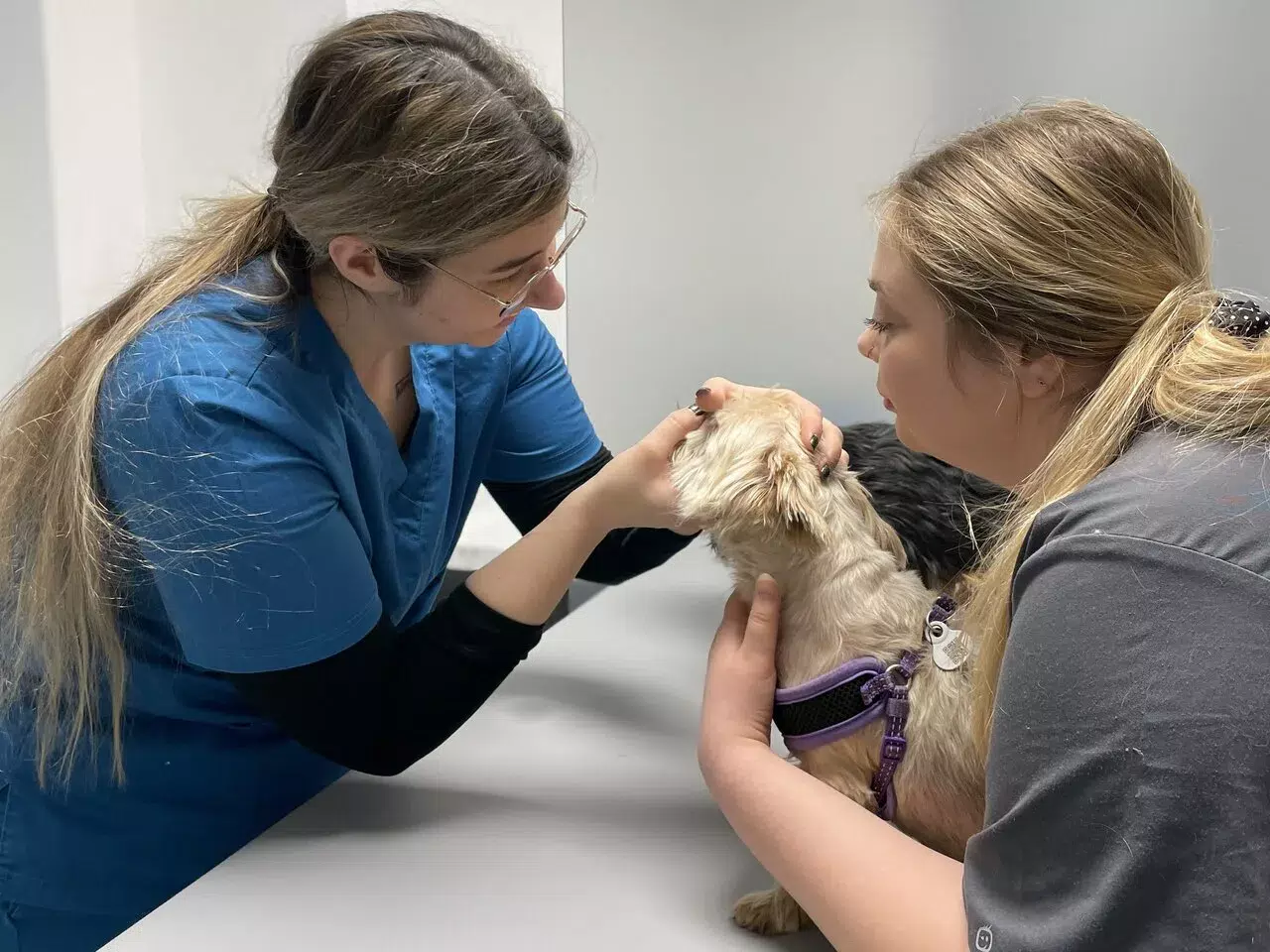
Naturally, the diagnosis should be made by a professional: a veterinarian or another member of the veterinary practice team.

Treating false pregnancy in dogs: medication and natural ways of shortening its course

Treatment of a false pregnancy depends on how severe the symptoms are and how they affect the bitch’s wellbeing. There are various options, including both medication and natural ways of shortening the course of a false pregnancy.

For bitches with pronounced and troublesome symptoms, the vet may prescribe anti-prolactin medication for a period of 5-10 days. These drugs reduce prolactin production and ease the symptoms of false pregnancy. In some cases, especially when the bitch shows aggression, anti-anxiety medication and sedatives may also be prescribed.

There are also natural ways of shortening a false pregnancy. Increasing the bitch’s physical activity with longer walks, training sessions or scent games can help distract her from maternal behaviour. Reducing the amount of food and access to water for a few days can also dampen milk production. It is also important to put away any objects the bitch may regard as her puppies, so as not to reinforce her maternal behaviour.

To sum up the key points: treating a false pregnancy in dogs may involve anti-prolactin medication together with natural methods of shortening the duration of the symptoms. Treatment should be tailored to the individual needs and health of the bitch. If the symptoms are severe or do not improve, it is always worth consulting a vet, who will select the appropriate treatment.

Preventing false pregnancy in dogs: the role of spaying and other preventive measures

An effective way to prevent false pregnancy is to have the bitch spayed. Spaying, which involves removing the ovaries and uterus, eliminates the risk of false pregnancy and other reproductive complications such as pyometra and mammary tumours. It is the most effective method of preventing false pregnancy and has many benefits for the bitch’s health.

Besides spaying, there are other preventive measures that can help reduce the risk of false pregnancy. One is to keep the bitch away from young puppies, which can stimulate prolactin secretion and increase the risk of a false pregnancy developing. It is also important to keep track of the bitch’s heat cycle and, if appropriate, consult a vet about the best time for spaying.

Supporting a bitch with a false pregnancy: helping your dog cope with the symptoms and stress

A false pregnancy can be stressful for both the bitch and her owner. There are, however, ways to help your pet cope with the symptoms and the stress associated with a false pregnancy.

The first step is to give the bitch peace and a sense of security. It is important not to disturb her while she is nesting and caring for her imaginary puppies. Do not take away the toys or objects she regards as her offspring. It is also best to avoid stroking her belly, as this can increase milk production.

During a false pregnancy it is also important to give the bitch enough physical exercise. Longer walks, training sessions or scent games can distract her from maternal behaviour and help reduce the symptoms of false pregnancy. Regular exercise can also bring her relief during this stressful period.

Supporting a bitch with a false pregnancy also means feeding her appropriately. It is important to adjust the amount of food to her current needs and reduce her portions. Bear in mind, though, that she still needs to receive adequate nutrients, so it is worth consulting a vet to work out the best diet for a bitch with a false pregnancy.

If the bitch is aggressive towards other members of the household or shows other unwanted behaviour, you should also consult a vet. The specialist may recommend anti-anxiety medication or sedatives to help her cope with the stress and anxiety associated with a false pregnancy.
Raw or cooked meat for your dog: which is better?

Choosing the right kind of meat for your dog, whether raw or cooked, matters a great deal for its health and wellbeing. In this article we look at whether raw meat is safe for dogs, the pros and cons of mixing raw meat with other types of food, and the potential risks of feeding raw. We also cover which meats can safely be fed raw and which are better cooked, and consider whether the BARF diet is right for your pet. By the end, you will know how best to manage your dog’s diet so that it stays healthy and happy.

Can dogs eat raw meat?

Many dog owners wonder whether raw meat is suitable for their pets. There are plenty of opinions on the subject, but it is worth sticking to a few objective, scientifically supported facts. First of all, raw meat can provide a dog with essential nutrients such as protein, fats and vitamins. At the same time, there is a risk from bacteria and parasites that may be present in raw meat. So the answer is: yes, as a rule a dog can eat raw meat, although there are exceptions. With proper quality control of this kind of food, you may well see a positive effect on your dog’s health.

Real-life examples show that some dogs thrive on a raw-meat diet. One owner of a larger-breed dog, for instance, noticed a marked improvement in her dog’s health after switching to a BARF (Biologically Appropriate Raw Food) diet. Her dog had more energy, and its coat became glossy and healthy. On the other hand, it bears repeating that some dogs may have digestive problems or allergies to raw meat, which may call for a consultation with a vet.

If you decide to feed your dog raw meat, above all choose high-quality meat and avoid products from unknown sources. Monitor your dog’s health regularly and watch for any worrying signs. It is also a good idea to consult your vet to make sure your pet’s diet is balanced and safe.

Can you mix raw meat with kibble or cooked food?

Some say that such a combination can lead to digestive problems, while others see it as an excellent way to add variety to a dog’s diet. Raw meat provides the dog with natural nutrients that can be lost in cooking, but on the other hand cooked food is easier to digest and may be safer from a bacteriological point of view.

It is worth weighing up the benefits and risks of mixing different types of food. Raw meat is rich in protein and enzymes that can support a dog’s health, but it may also contain dangerous bacteria. Cooked food, although less risky in bacteriological terms, can lose some of its nutritional value during heat treatment. That is why some owners settle on a compromise, feeding their dog both raw meat and cooked food to provide a complete diet. It is recommended, however, to stick to one form of feeding. Feeding raw meat is not necessarily a better choice in nutritional terms than a complete food from a reputable manufacturer.

Can raw meat be harmful to dogs?

To continue the theme: the decision to feed a dog raw meat is a controversial one. As we have mentioned, raw meat can be rich in protein and the nutrients a dog needs to stay healthy. But there is a risk from bacteria and parasites that may be present in unprocessed meat. Salmonella and E. coli are just some of the pathogens that can harm both the dog and its owner. Cooking the meat, on the other hand, eliminates most of these hazards, but may also reduce the content of certain nutrients. Cooked meat is safer, but it does not always give a dog all the benefits that raw meat offers.

Which is better for dogs: raw or cooked meat?

Many people believe that a raw diet is more natural and closer to what dogs eat in the wild. Raw meat contains more enzymes and nutrients that can be lost in cooking. However, raw meat carries a risk of bacterial infections and parasites, which can be dangerous for both the dog and its owner. Cooked meat, on the other hand, is safer from a hygiene point of view. Cooking eliminates most bacteria and parasites, reducing the risk of disease. 

Experts often recommend cooking meat for dogs, especially if the animal has a weakened immune system or is prone to infections. Cooked meat is also easier for some dogs to digest, which can be good for their digestive system. The choice between raw and cooked meat depends on many factors, including the dog’s health, its taste preferences and the owner’s lifestyle. Experts advise consulting a vet before making a decision, to ensure that the dog’s diet is balanced and safe.

As a general rule of thumb, it is best not to feed raw meat to a dog whose body is weakened or who has stomach or digestive problems.

Which meats should never be fed raw to dogs?

Not every kind of meat is suitable for feeding raw. Raw pork is one to avoid: it may contain viruses such as Aujeszky’s disease virus, which is fatal to dogs.

Raw pork can also be a source of parasites such as Trichinella spiralis, which can lead to serious health problems. Another meat that should not be fed raw is poultry. Although some owners choose to feed their dogs raw chicken, there is a risk of infection with bacteria such as Salmonella and Campylobacter. These bacteria can cause serious infections in dogs and in the people who come into contact with them. It is also best to avoid feeding raw game, especially if it has not been properly tested. Game can carry parasites and bacteria that are dangerous to a dog’s health. Raw meat from wild animals can also be a source of tick-borne diseases such as Lyme disease.

What is the BARF diet, and is it worth trying?

The BARF diet, or Biologically Appropriate Raw Food, is a way of feeding dogs based on raw meat, bones and vegetables. Its supporters claim it is the closest thing to the natural diet of our dogs’ wild ancestors. Raw meat provides dogs with essential nutrients such as protein, fats, vitamins and minerals, which are more easily absorbed than those in processed food. The BARF diet is controversial, however. Its critics point to the risks of feeding raw meat, such as the possibility of infection with bacteria (e.g. Salmonella) and parasites. It is also worth remembering that meals need to be properly balanced, which can be difficult without the right knowledge. There are many cases of dogs that switched to BARF and saw their health improve, but just as important are the cases where the diet was applied incorrectly and led to health problems.

Before you put your dog on a BARF diet, it is worth consulting a vet or an animal nutrition specialist. Your dog’s individual needs may differ, and a properly balanced diet is key to its health and wellbeing.

Hair Loss in Dogs: Causes, Symptoms, Diagnosis and Treatment

In this article we look at the different aspects of hair loss in dogs, including its causes, symptoms, diagnosis and treatment options. You will learn what can cause excessive shedding in a dog, how to recognise alopecia and which tests your vet may recommend. We will also cover the various treatments depending on the cause of hair loss, along with information on seasonal shedding and how quickly the coat grows back once treatment is complete. You will also find advice on dietary supplements that support coat regrowth.

Causes of hair loss in dogs

Hair loss in dogs can have many causes. One of the main ones is an infestation of skin parasites such as fleas or mange mites. These parasites can cause intense itching, which leads to scratching and skin damage, which in turn can result in excessive hair loss. Another cause of alopecia in dogs is allergies, both food and contact allergies. An allergic reaction can cause skin inflammation and damage to the hair follicles.

Hormonal disorders can also lead to excessive hair loss in dogs. Hypothyroidism and hyperadrenocorticism are examples of such disorders. Bacterial and fungal infections can also affect the condition of a dog’s coat. Bacteria and fungi can cause skin inflammation and weaken the hair follicles, leading to excessive hair loss. Some genetic conditions can also cause alopecia in dogs. Nutritional deficiencies or the use of steroid medication weaken the skin barrier and can lead to excessive hair loss.

Symptoms of hair loss in dogs

Alopecia in dogs is not just excessive shedding; it comes with a range of accompanying symptoms. Inflammatory changes such as redness, swelling or a rash may appear on the bare skin. Thickened, hardened skin is also common, the result of chronic inflammation. In addition, hair loss can lead to changes in skin pigmentation: the skin may become darker or lighter where the hair has fallen out.

One of the most common symptoms of alopecia in dogs is itching. The dog may scratch the bald areas intensely, which can damage the skin and cause sores. Bald patches may also form on the dog’s skin. These can be small and clearly separated from one another, or they can spread across larger areas of the body.

Types of hair loss in dogs

The following types of alopecia can be distinguished in dogs:

Hormonal alopecia

Hormonal disorders such as hypothyroidism or Cushing’s disease can lead to symmetrical hair loss, thinning of the skin and other skin changes.

Allergic alopecia

Food, contact and environmental allergies (for example to pollen or dust mites) can cause intense itching and localised hair loss. These symptoms are often accompanied by redness and skin irritation.

Parasitic alopecia

External parasites such as fleas, lice or mange mites can cause localised hair loss, itching and skin irritation. Regular parasite prevention is key to avoiding this type of alopecia.

Infectious alopecia

Bacterial, fungal and yeast infections can lead to hair loss accompanied by redness, purulent discharge and other signs of inflammation. Accurate diagnosis and treatment with antibiotics or antifungal medication are essential.

Alopecia caused by poor nutrition

Deficiencies in nutrients such as biotin, zinc or unsaturated fatty acids can weaken the structure of the hair and cause it to fall out. A balanced diet is essential for a healthy coat.

Stress-related alopecia

Stress caused by sudden changes in a dog’s environment, moving house, the arrival of a new family member or intense emotional experiences can lead to hair loss. In such cases it is important to identify and minimise the sources of stress.

Idiopathic alopecia

In some cases the cause of hair loss is unknown. This type of alopecia requires detailed diagnostic work to rule out other potential causes. It may involve genetic disorders or unidentified environmental factors.

Patchy alopecia

Characterised by localised, round bald patches, often on the flanks, back or limbs. It can be caused by infections, parasites or local irritation.

Symmetrical alopecia

Symmetrical hair loss, usually caused by hormonal disorders such as hypothyroidism. It appears on both sides of the body in similar places.

Hair loss around the eyes

Hair loss around the eyes, also known as “spectacles”, is often caused by infections, allergies or autoimmune problems. It may be accompanied by redness and irritation of the skin around the eyes. Another common cause of this type of hair loss is demodicosis, a chronic parasitic disease.

Diagnosing hair loss in dogs

Diagnosing alopecia in a dog is a key step in identifying the cause of the problem and starting the right treatment. Your vet may recommend various examinations and tests to reach an accurate diagnosis.

One of the basic tests is a blood test. Blood analysis can help detect hormonal disorders such as hypothyroidism or hyperadrenocorticism. Measuring thyroid hormone levels is particularly important, as hypothyroidism can be one of the causes of hair loss in dogs.

Another important test is microscopic examination of hairs and skin scrapings. This allows the condition of the hair and skin to be assessed under a microscope. It can reveal the presence of skin parasites or other pathogens that may be causing the hair loss.

In some cases your vet may also recommend a skin biopsy for histopathology. This involves taking a skin sample and analysing it under a microscope. The test can provide information about possible inflammatory changes, tumours or other pathological processes in the skin that may be leading to hair loss.

All these examinations and tests are necessary to reach an accurate diagnosis and establish the cause of your dog’s hair loss. Based on the results, your vet will be able to start appropriate treatment targeted at the specific cause of the problem.

Treating hair loss in dogs

Treatment for alopecia in dogs depends on the cause of the hair loss and may involve a variety of therapeutic approaches. The choice of treatment depends on the diagnosis made by your vet. Below are some common treatments depending on the cause of hair loss:

  1. Antibiotics: if the hair loss is caused by a bacterial infection, your vet may prescribe antibiotics. Antibiotics help fight the bacteria and stop the infection from spreading further.
  2. A special diet for your dog: in some cases hair loss in dogs can be caused by a food allergy. If so, your vet may recommend a special elimination diet that excludes potentially allergenic ingredients. This diet makes it possible to identify which ingredients trigger the allergic reaction and to find a suitable diet for your dog.
  3. Hormone therapy: if the hair loss is caused by hormonal disorders such as hypothyroidism or hyperadrenocorticism, your vet may prescribe hormonal medication. These drugs help restore hormonal balance and improve the condition of the coat.
  4. Antiparasitic products: if the hair loss is caused by skin parasites such as fleas or mange mites, your vet may recommend antiparasitic treatments. These products eliminate the parasites and prevent the infestation from spreading further.

Every case of alopecia in dogs is different, so it is important to consult a vet for an accurate diagnosis and the best treatment plan. Bear in mind that some causes of hair loss cannot be cured; in those cases, supportive therapy and lifelong care of your dog’s skin are the only options.

Seasonal shedding in dogs

It is worth pointing out that there are situations where a pet losing its coat should not worry us. Seasonal shedding in dogs is a completely natural process that depends on the time of year. Dogs go through periods of summer and winter shedding, during which the undercoat is replaced. In summer a dog sheds its thick winter coat to adapt to warmer temperatures. In winter, on the other hand, the undercoat becomes thicker to provide better insulation.

During seasonal shedding a dog may lose hair unevenly, which is perfectly normal. You may notice tufts of undercoat sticking out that can easily be removed with your fingers. It is important, however, to distinguish seasonal shedding from excessive hair loss caused by other health issues.

To support coat regrowth after seasonal shedding, it is worth considering skin and coat supplements. These may contain nutrients such as biotin, zinc and omega-3 fatty acids, which are essential for a healthy coat. Such supplements can support hair regrowth and improve the condition of your dog’s skin.

Remember, though, that you should consult a vet before giving your dog any supplements. The vet will be able to assess your dog’s health and recommend suitable supplements tailored to its individual needs.

How long does it take for a dog’s coat to grow back?

How quickly a dog’s coat grows back after treatment depends on many factors, such as the cause of the hair loss and any recommendations on dietary supplements. Thinning caused by inflammatory conditions such as bacterial or fungal infections starts to grow back relatively quickly, within as little as two weeks. Regrowth after non-inflammatory alopecia, however, can take much longer, up to three months.

With non-inflammatory alopecia, regrowth is slower because the hair follicles need time to regenerate and return to normal function. During this period it is worth supporting your dog’s body with suitable dietary supplements. Skin and coat supplements such as biotin, zinc and omega-3 fatty acids can support hair regrowth and improve the condition of your dog’s skin.