
Contact us Make an appointment

How to prepare your dog or cat for anaesthesia

What is general anaesthesia?

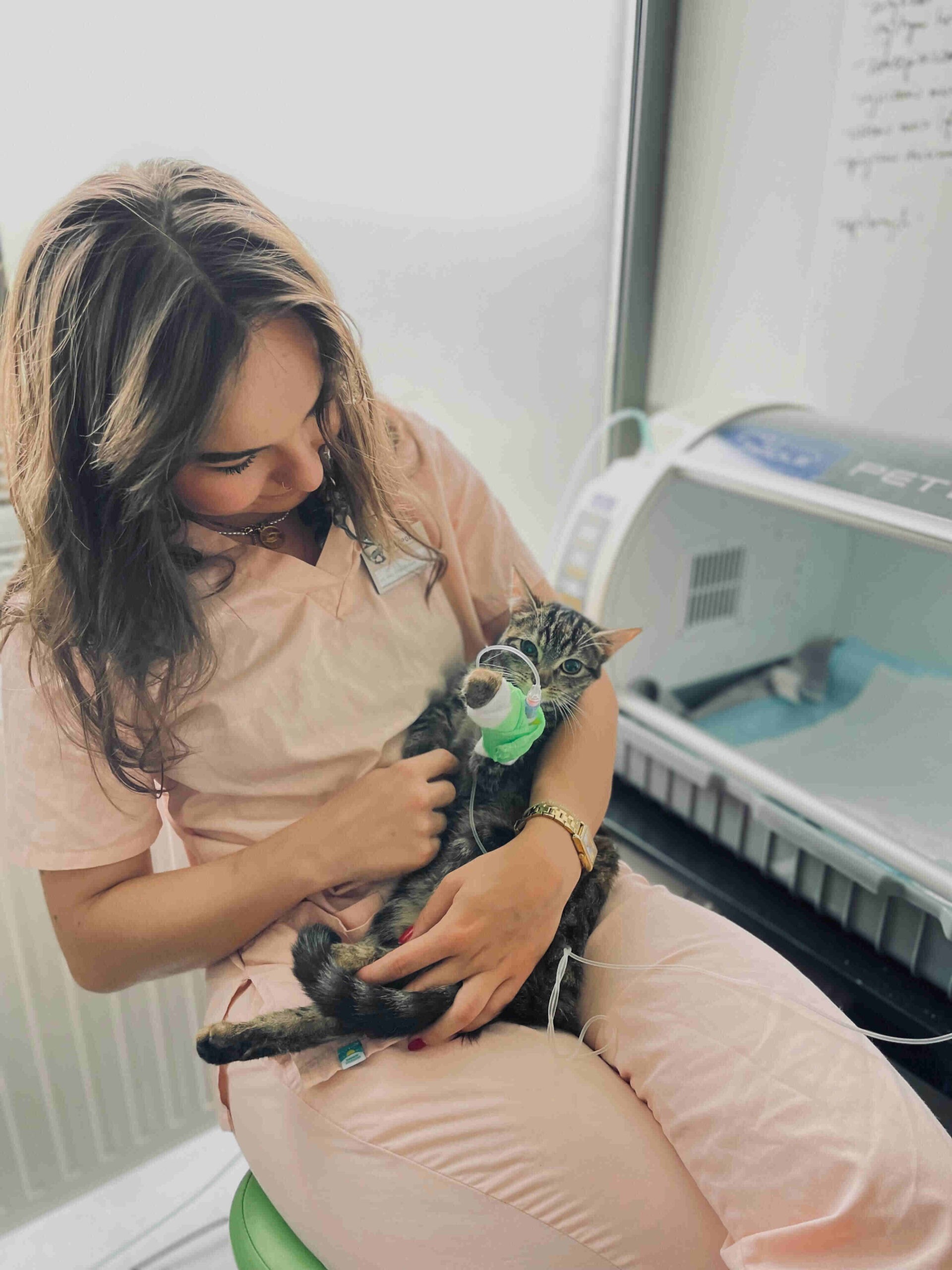
General anaesthesia is a state the patient is placed in to switch off consciousness and the perception of pain. In other words, we want the animal to go to sleep and be unaware of what we are doing around it.

For planned procedures, a dog or cat must be properly prepared so that everything goes safely and comfortably.

Life-saving operations, meaning those that are not planned, carry a slightly higher risk, but veterinary medicine is constantly advancing and we are able to perform such surgery successfully.

What does an owner need to know before their pet’s planned procedure?

The veterinarian always has to confirm that the animal is fit for the procedure, so they may ask a few questions about the patient. It is well worth being ready for questions such as:

  • Is the animal behaving normally for itself?
  • Is it active and eating as usual?
  • Is it on any regular medication?
  • Have any worrying symptoms appeared recently?

Which tests are needed before anaesthesia?

Owners need to be aware that anaesthesia is an intervention in the animal’s body and carries a risk to life, which is why assessing the patient’s health beforehand is so important.

Tests are ordered based on the animal’s age, breed and general health. Past illnesses and any previous procedures are also taken into account.

Before routine procedures, blood tests are required: a complete blood count and biochemistry. If the operation is more complex, or the patient is older or has a chronic illness, the tests may be extended to include additional parameters.

Another very important diagnostic test is an echocardiogram. An echo is simply an ultrasound scan of the heart together with specialist measurements of the organ. Particular attention is paid to older animals and to breeds predisposed to heart disease. At the same time, remember that crossbreed dogs and cats can have heart problems too, so this is an important test for all patients.

One of the most important things is that the animal arrives for the procedure with an empty stomach. This restriction does not apply to water, which the animal may drink. It is a priority because the drugs used for anaesthesia can cause vomiting, and there is then a risk of the animal inhaling stomach contents, which is life-threatening. Another reason the patient must fast is that the drugs work better on an empty stomach, so there is no need to give larger amounts.

Intense physical exertion should be avoided the day before and on the day of the procedure. Any training, long walks or play should be put off to another day and planned so as not to put excessive strain on the body.

Summary

We know very well that procedures on four-legged patients cause their owners a great deal of stress, which is why we do our best to explain our procedures clearly, so that owners feel we are doing everything we can to keep our patients comfortable. If you have any further questions about your dog’s or cat’s procedure, do not hesitate to call our clinics! We are here to answer every one of them.
What does breathing difficulty look like in dogs and cats?

How can you tell that an animal has a breathing problem?

Breathing difficulty can look different depending on its cause, as it may originate in the respiratory system, the circulatory system or a breed predisposition. 

It is essential that owners always pay attention to the way their pet is breathing. 

The most common signs of breathing difficulty include:

  • rapid breathing
  • shallow or, conversely, very deep breathing 
  • rattling or gurgling sounds
  • pale mucous membranes
  • lethargy or restlessness 
  • wheezing when breathing 

Breathing difficulty is divided into inspiratory and expiratory dyspnoea, and the type of problem is one of the key pieces of information in reaching a diagnosis. 

Inspiratory dyspnoea is typically accompanied by sounds such as wheezing or rattling. It usually originates in the upper airways and may be caused by an infection, an allergic reaction or cancer. This is the picture we often see in brachycephalic dog breeds, whose anatomy makes breathing harder. 

Expiratory dyspnoea is characterised by resistance when breathing out. It can be seen, for example, in allergic bronchitis, when excessive secretions are produced that make exhaling difficult. It is often accompanied by a characteristic puffing or laboured breathing. 

What causes breathing difficulty in animals?

As described above, breathing problems can stem from the respiratory system, the circulatory system, anatomy or environmental factors. 

Left-sided heart failure is a particularly dangerous problem, because blood backs up in the pulmonary vessels, leading to pulmonary oedema. 

Polyps are another common reason why an animal may have trouble breathing. Polyps are growths that form on the lining of the nose or throat and restrict the flow of air. Tumours have a similar effect. 

Another cause of laboured breathing is so-called extreme breeding, which gives us dogs with very flat noses. Brachycephalic breeds often have a muzzle that is too short, nostrils that are too narrow and a soft palate that is too long. Together, these make every breath a struggle. 

A further anatomical defect, which may be genetic, is tracheal collapse, often seen in small-breed dogs. 

What should you do when your pet is struggling to breathe?

Whatever the cause, as soon as you notice anything abnormal about your dog’s or cat’s breathing, take them to a 24-hour veterinary clinic as quickly as possible.  Time is critical here, because the longer the condition persists, the harder it is to reverse. Clearly, an animal in respiratory distress can deteriorate suddenly, and the situation can quickly become life-threatening. 

What is chemical castration in dogs?

Chemical castration is one way of preventing dogs from breeding without surgery. The procedure involves placing an implant under the skin that suppresses the release of sex hormones in males. The implant acts only on testosterone levels, and the active substance is released over a set period of time. The procedure has to be repeated to maintain the effect. If chemical castration is not renewed, behaviour driven by the sex drive will return, which means it can be used periodically, for example, without the need for surgery.

What are the advantages of chemical castration in dogs?

One of the main advantages of this type of castration is that the male’s gonads do not have to be permanently removed. The procedure is fully reversible, so if the animal is not given another implant, its fertility and sexual behaviour return to what they were before the first castration. The implant can also be used as a temporary solution.

What are the disadvantages of chemical castration?

First of all, it is a procedure that has to be repeated, and depending on the drug used, some time must pass before the product starts to work and block the release of testosterone. Bear in mind that each implant may come with possible side effects. The dog may react with digestive upsets such as diarrhoea and vomiting, or a general feeling of being unwell.

Which dogs is chemical castration recommended for?

This procedure is a good alternative for show dogs, which find themselves in a small space with many other dogs. A male may become distracted and focus on the bitches rather than on his owner.

Another group of dogs for which this type of castration is the better option are animals that are not suitable for surgery because of other health problems. In their case there is no anaesthetic risk, just a visit to the clinic. 

Stud dogs can also be given the implant during periods when no matings are planned. 

Is chemical castration effective in controlling aggressive behaviour in dogs?

If a dog shows aggressive behaviour, the first step is to consult a behaviourist to find out what is causing it. Our behaviourist at Zviropolis can help assess the dog’s behaviour and, with a full picture of the situation, advise on the best solution. When the problem is hormonal and linked to arousal from the scent of an unspayed bitch, chemical castration can prove a very good solution. Once the implant has had time to take effect, the animal will become noticeably calmer and stop paying so much attention to other dogs.