Contact us Make an appointment

Why do dogs eat stones? Causes and solutions

A dog that eats stones is enough to worry any owner. Odd as the habit looks at first glance, there are plenty of reasons behind it. In this article we take a closer look at what drives the behaviour, the health risks it carries, and how to prevent it. Understanding what motivates your dog is key to keeping it safe and well.

  • Dogs may eat stones because of health problems such as indigestion or neurological disease. The signs worth watching for are vomiting and a change in appetite.
  • Behavioural causes such as boredom or stress can also lead to stone eating. Giving your dog the right toys and enough activity helps prevent it.
  • Eating stones is dangerous for dogs, as it can damage teeth and block the digestive tract, which calls for immediate veterinary attention.
  • Nutritional deficiencies, such as anaemia caused by a lack of iron, can push dogs to seek alternative sources of minerals and swallow inedible objects.
  • To stop your dog eating stones, avoid stony places on walks and provide safe chew toys.
  • If your dog swallows a stone, see a vet promptly. Possible interventions include gastric lavage or surgical removal.

Why do dogs eat stones?

Dogs eat stones for a variety of reasons, and health problems are one of them. Indigestion, intestinal inflammation or neurological disease can all trigger this unusual behaviour. In such cases the dog feels discomfort or pain and looks for relief by chewing and swallowing hard objects. Watch out for signs such as vomiting or a change in appetite, which may point to an underlying health problem.

Another reason dogs turn to stones is behavioural. Boredom, stress and a wish to get their owner’s attention are only some of the factors at work. Puppies are naturally curious about the world, and without suitable toys they will experiment with whatever comes to hand. To prevent this, give your dog proper mental and physical stimulation through toysgames and shared activities. Regular walks and time spent together are an effective way of drawing a dog’s attention away from dangerous objects.

Is eating stones dangerous for dogs?

Eating stones is a habit that can lead to serious health problems. First of all, stones can damage a dog’s teeth and the tissues of its mouth. They are hard and sharp, so chewing them can fracture teeth and injure the gums. That is painful for the animal and requires veterinary treatment. Swallowing stones carries an even greater risk — they can lodge in the digestive tract and block it.

A blocked digestive tract is an emergency requiring immediate veterinary care. Stones can cause intestinal obstruction, which in turn may lead to serious complications such as:

  • Intestinal necrosis – when blood stops reaching the intestinal tissue, it begins to die off.
  • Intestinal perforation – a stone can pierce the intestinal wall, which is life-threatening for the dog.

Eating stones can also upset the dog’s electrolyte balance. That is why it is so important to keep an eye on our dogs’ behaviour and act quickly at the first worrying sign.

Which deficiencies can lead to stone eating?

Stone eating in dogs can be linked to various nutritional deficiencies that affect behaviour. One of them is anaemia, often the result of too little iron in the diet. Anaemia weakens the body and heightens the urge to seek alternative sources of minerals, which may prompt a dog to swallow inedible objects such as stones. Look out for these signs of anaemia:

  • weakness and fatigue,
  • pale gums,
  • tiring quickly on walks.

A proper diet is fundamental to a dog’s health and wellbeing. Dietary shortfalls can lead to unwanted behaviour, so it is important to supply all the nutrients your dog needs. Besides iron, make sure the diet is rich in other minerals and vitamins. Suitable toys and activities will also help draw your dog’s attention away from stones and satisfy its natural urge to chew. Regular check-ups with a vet and close attention to your dog’s behaviour will help catch any health problems early.

How can you stop your dog eating stones?

Preventing stone eating is a key part of looking after your dog’s health and safety. On walks, pay particular attention to where your dog is going. Avoid places strewn with stones, and if that is not possible, always keep your dog under supervision. A muzzle is worth considering as a temporary safeguard, though it is no long-term solution. Focus instead on giving your dog suitable toys and chewing alternatives. Safe toys are an effective way of drawing a dog’s attention away from stones and satisfying its natural need to chew.

Doing things together with your dog is an excellent way to head off the boredom that so often leads to unwanted behaviour. We suggest engaging games such as fetch or hunting for treats hidden in the grass. Regular training and behavioural therapy can also help eliminate stone eating. It is worth consulting a professional trainer or behaviourist to draw up a plan tailored to your own dog.

  • Supervision on walks
  • Avoiding stony places
  • Providing safe toys
  • Regular training and behavioural therapy

With these measures we can protect our dogs effectively from the dangers that come with eating stones.

What should you do if your dog swallows a stone?

If you notice that your dog has swallowed a stone, it is important to act fast. Signs that something is wrong include nauseavomiting and a change of mood in your dog. It may become subdued or downcast, often because of stomach pain. Loss of appetite or difficulty passing stools are also worth noting. If you suspect your dog has swallowed a stone, do not put off a visit to the vet.

The vet may take a different approach depending on the situation. The most common options are:

  • Gastric lavage – used for smaller stones that can be removed without surgery.
  • Surgical removal of the stone – necessary when the stone is large or is blocking the digestive tract.

Remember that acting quickly can save your dog’s life and prevent serious complications. Keeping an eye on your dog’s behaviour and steering clear of stony places on walks are the key preventive measures.

Summary

Dogs eat stones for a range of reasons, both medical and behavioural. Problems such as indigestion or intestinal inflammation can trigger this unusual habit when a dog seeks relief by chewing hard objects. Boredom, stress or a wish for the owner’s attention, meanwhile, are behavioural factors that can equally drive a dog to pick up stones. The important thing is to observe your dog and provide it with proper mental and physical stimulation.

Eating stones carries serious health risks, including damaged teeth and a blocked digestive tract. Nutritional deficiencies, such as anaemia caused by a lack of iron, may be one reason for the behaviour. To prevent it, supply your dog with all the nutrients it needs and provide safe chew toys. If a stone is swallowed, prompt veterinary treatment is essential.

FAQ

What other objects might dogs try to eat besides stones?

Dogs may try to eat all sorts of inedible things: plastic toys, sticks, fabric and even rubbish. The behaviour can stem from curiosity, boredom or health problems. It is important to keep track of what your dog has access to chew and to offer safe alternatives.

Are all breeds equally prone to eating stones?

Some breeds may be more prone to it because of their natural instincts or energy levels. Highly active breeds, for instance, may show the behaviour more often out of boredom. That said, any dog, whatever its breed, can develop the habit as a result of health or behavioural problems.

What are the long-term effects of a dog eating stones?

The long-term effects can include damaged teeth, chronic gastrointestinal problems and the risk of repeated blockages of the digestive tract. That may mean frequent trips to the vet and surgical intervention.

Are there specialist diets for dogs inclined to eat inedible objects?

Yes, specialist diets have been developed for dogs inclined to eat inedible objects. They often contain additional nutrients and minerals that can help meet the dog’s nutritional needs and reduce its interest in dangerous objects.

How do you spot the first signs of a health problem linked to eating stones?

The first signs may include vomiting, loss of appetite, weakness and changes in behaviour. If you notice these symptoms in your dog, consult a vet as soon as possible.

Can the risk of a dog eating stones be eliminated altogether?

Removing the risk entirely may be difficult, but it can be reduced considerably with proper care and supervision. Regular walks in safe places, suitable toys and attention to diet are the key elements of prevention.
The canine ethogram: understanding the behaviour of our four-legged friends

A canine ethogram is a tool that helps us make sense of the many things our four-legged friends do. It lets us read the signals dogs send far more accurately, which matters enormously both in their dealings with other dogs and in their relationships with people. In this article we take a closer look at what a canine ethogram actually is, what it is used for, and how it shapes the way we see dog behaviour. This knowledge is invaluable for any owner who wants to build a strong, healthy bond with their dog.

  • A canine ethogram is a detailed catalogue of behaviour typical of dogs, which helps us understand how they communicate with one another and with people.
  • Ethograms are compiled by ethologists, who study different aspects of dogs’ lives in order to give owners the knowledge they need to understand their dogs better.
  • Early ethogram research was based on observations of wolves, which led to mistaken conclusions; today the differences brought about by domestication are taken into account.
  • Basic restful behaviour such as sleep and rest is crucial to a dog’s physical and mental health; without enough rest, health problems follow.
  • Arousing behaviour such as chasing and play has a positive effect on a dog’s mental and physical health and helps develop social skills.
  • Social interaction is essential to a dog’s healthy emotional development; a well-socialised dog can read the signals of other dogs and of people effectively.
  • A walk is not only a chance to relieve itself, but also an opportunity to explore the surroundings and develop the dog’s cognitive skills.

What is a canine ethogram?

A canine ethogram is a detailed catalogue of the behaviour characteristic of the species. It helps us understand how dogs communicate both among themselves and with people. An ethogram covers a wide range of typical canine behaviour, from calming and threatening signals to the things dogs do every day, such as sleeping and playing. Understanding this behaviour is essential for owners, because it makes it far easier to meet the needs of our four-legged friends.

Compiling an ethogram is a job for specialists in ethology, the science of animal behaviour. Ethologists study and verify various aspects of canine life in order to build a complete picture of what dogs do. Thanks to their work we understand dogs’ needs better and can respond to them appropriately. It is worth stressing that an ethogram is not a fixed document — it is continually updated as research advances. It is to ethologists that we owe the knowledge that helps us build stronger bonds with our dogs.

A history of ethogram research in dogs

Research into the canine ethogram has its roots in observations of grey wolves, the first attempts to understand what dogs do. Scientists initially assumed that dogs and wolves followed similar behavioural patterns, which led to mistaken conclusions. Transferring observations from wolves to dogs was one of the main errors, because the differences arising from domestication were ignored. At the time dogs were often regarded as less complex creatures, which made accurate research harder still.

As the science developed, the value of studying feral and free-ranging dogs became apparent. This work gave a much better picture of how dogs behave naturally in their own environment. Those observations proved crucial in building a more precise canine ethogram, one that took in the full variety of behaviour connected with social interaction and finding food. It allowed researchers to interpret the behaviour of domestic dogs more accurately and to adapt training methods to their natural needs.

Basic restful behaviour in dogs

Basic restful behaviour plays an important part in a dog’s daily life. The most significant elements are sleep and rest, which take up a large share of the day — as much as 16 hours. Enough sleep is essential to a dog’s physical and mental health. Without proper rest, health problems follow, from loss of appetite to reduced immunity. To help your dog sleep comfortably, give it a quiet spot of its own where it can stretch out freely.

Other important calming behaviours are chewinglicking and gnawing. These activities help a dog shed stress and tension and stimulate serotonin production. It is worth giving your dog access to toys or chews that let it satisfy these needs. Quiet walks are also conducive to relaxation, giving the dog a chance to explore and sniff about. In doing so it gains confidence and satisfies its natural urge to discover the world. Regular grooming and time spent with people likewise lower a dog’s stress levels.

Arousing behaviour and why it matters

Arousing behaviour in dogs, such as chasing prey or playing, plays an important part in their daily lives. These activities not only bring dogs joy, they also affect their mental and physical health. During such activity the dog’s body produces more dopamine and noradrenaline, which translates into better motivation and a greater capacity to learn new skills. Arousing behaviour falls into several categories:

  • Chasing prey – a natural instinct that lets a dog develop its tracking and trailing skills.
  • Play with other dogs – builds social and communication skills.
  • Interaction with people – shared games such as fetch or tug-of-war strengthen the bond between dog and owner.

Bear in mind that the right amount of arousing activity is essential to a dog’s healthy development. It teaches dogs to handle their emotions and sharpens their intelligence. This kind of behaviour also helps keep energy levels healthy and prevents the behavioural problems that stem from boredom or frustration. To give your dog the stimulation it needs, involve it regularly in different forms of play and physical activity.

Social interaction in the world of dogs

Social interaction plays a key part in dogs’ daily lives. Contact with other dogs and with people alike is essential to a dog’s healthy emotional and social development. Dogs communicate through a wide range of signals, some calming and some threatening. Calming signals such as yawningturning the head away or licking the nose, help reduce tension and avoid conflict. Threatening signals, on the other hand, such as growling or barking, serve to warn off a potential threat.

A well-socialised dog can read these signals accurately and respond to them appropriately. As a result it avoids unnecessary conflict and copes better in all sorts of social situations. Owners should pay attention to these subtle forms of communication so as to understand their dogs’ needs better. Regular contact with other dogs and with people allows a dog to develop its social skills, which is hugely important for its wellbeing. Here are a few of the benefits of good socialisation:

  • Greater confidence – dogs that mix with others regularly become more self-assured.
  • Better communication skills – socialisation helps dogs read others’ signals and send their own more clearly.
  • Less tendency towards aggression – well-socialised dogs behave aggressively far less often.
  • Greater adaptability – dogs learn to cope with new situations and surroundings.

The role of the walk in a dog’s life

A walk is not merely a chance for a dog to relieve itself; above all it is an opportunity to explore the surroundings and to socialise. Out on a walk a dog can sniff about, which is its natural way of getting to know the world. In doing so it develops its cognitive skills and satisfies its need to discover new scents. Exploring the surroundings lets a dog work off energy and stimulates its mind, both essential to its mental health.

A walk also gives a dog the chance to interact with other dogs and with people. This is an important part of its life, helping to build confidence and communication skills. To make a walk worthwhile, a few principles are worth following:

  • A long lead – lets the dog move freely and explore.
  • No rushing – give your dog time to sniff and take in its surroundings.
  • Safety – always clean up after your dog and steer clear of hazardous places.

With a well-planned walk, a dog gets the full benefit of this daily ritual, and that shows in its general wellbeing and health.

Summary

A canine ethogram is a detailed catalogue of behaviour typical of the species, and it helps us understand how dogs communicate both with one another and with people. It covers a wide range of behaviour, from calming and threatening signals to the things dogs do every day, such as sleeping and playing. Thanks to the work of ethologists, who study and update ethograms, owners can respond better to their dogs’ needs and build stronger bonds with them.

Research into the canine ethogram began with observations of grey wolves, but over time scientists came to recognise the differences created by domestication. Today research focuses on how dogs behave naturally in their own environment, which allows more precise ethograms to be drawn up. That in turn makes it possible to understand domestic dogs better and to adapt training methods to their natural needs.

FAQ

What mistakes do dog owners most often make where the ethogram is concerned?

Owners often overlook, without meaning to, the subtle signals their dogs send — yawning or nose-licking, for instance — which can indicate stress or discomfort. Another mistake is anthropomorphism, that is, attributing human emotions and motives to dogs, which leads to misunderstandings in communication.

Do all dogs show the same behaviour described in the ethogram?

Although a great deal of behaviour is shared by most dogs, differences can arise depending on breed, age, life experience and individual temperament. That is why it is important to observe your own dog and adapt to its particular needs.

How can I use what I know about the ethogram in daily life with my dog?

Understanding the ethogram makes it easier to interpret a dog’s needs and emotions. You can then respond to its behaviour more effectively, which improves the relationship between owner and animal. This knowledge is also useful when training a dog and when working through behavioural problems.

Does a dog’s ethogram change as the animal ages?

Yes, dogs’ behaviour can change with age. Puppies are more inclined to play and explore, whereas older dogs may prefer quieter pursuits. As a dog ages, new health and behavioural needs may also appear.

How important is socialisation in the context of the canine ethogram?

Socialisation plays a key role in developing a dog’s social skills. A well-socialised dog is better at interpreting the signals sent by other dogs and by people, which helps it avoid conflict and cope with a variety of social situations.

Do ethograms differ between breeds?

Different breeds may show different behavioural patterns because of their genetic predispositions and the work they were historically bred for. Herding dogs, for example, may have a stronger instinct to watch over a flock, while hunting dogs may be more inclined to chase prey.

What are the best ways to reduce a dog’s stress according to the ethogram?

To reduce stress in a dog, make sure it gets enough sleep and has access to toys for chewing and gnawing. Regular walks and social contact also help lower stress levels. It is equally important to create a safe home environment in which the dog feels comfortable.

Cat owners, take note! When hairballs turn dangerous — don’t miss these signs

What are hairballs?

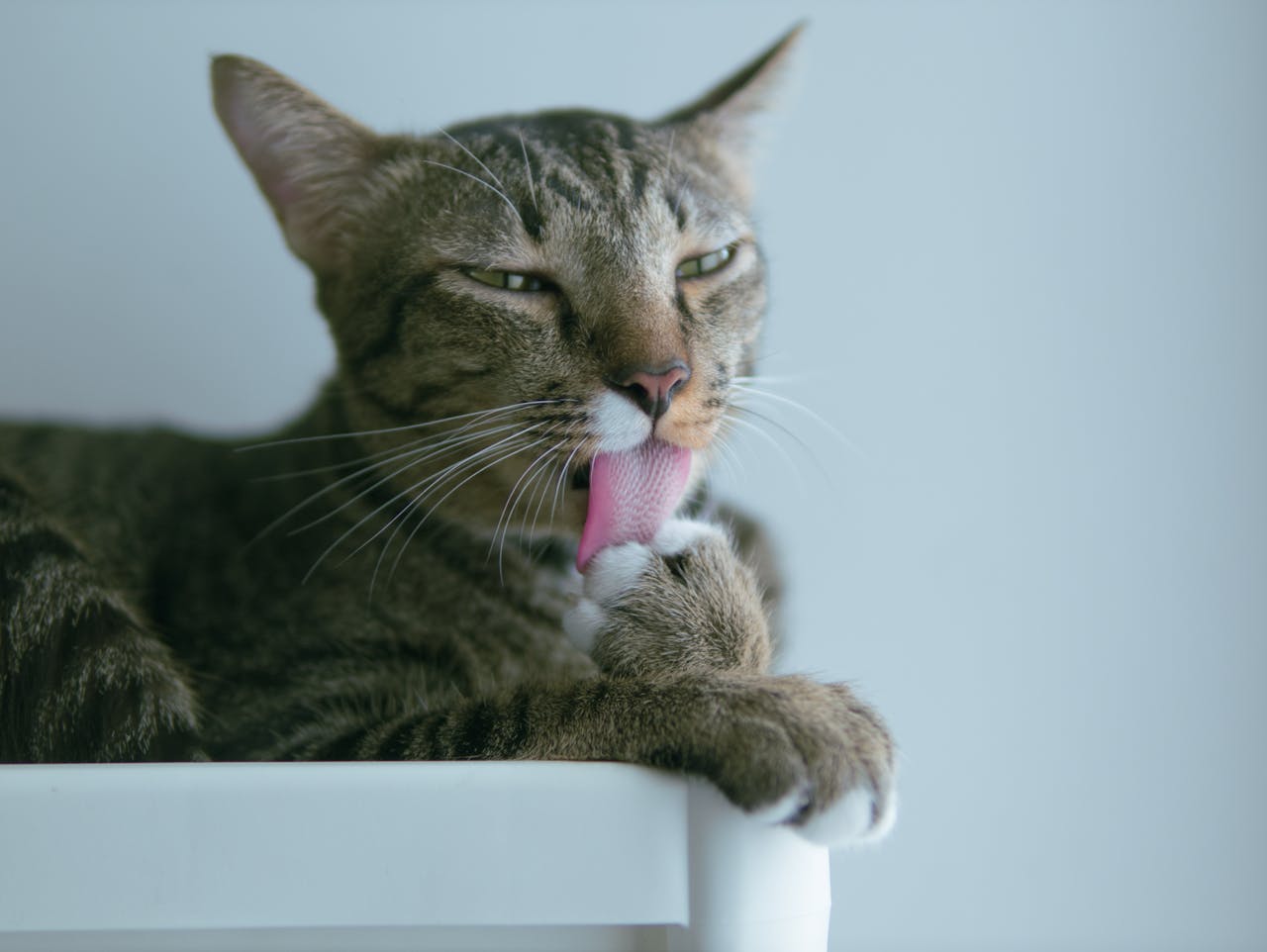
Hairballs, or trichobezoars, are a by-product of the way cats groom themselves. A cat’s tongue is covered with tiny stiff barbs that comb dead hair and dirt out of the coat very efficiently. Unfortunately, some of that hair is swallowed and gathers into balls in the digestive tract. Hairballs cause discomfort and, in some cases, more serious health problems, so they are worth paying close attention to.

Are hairballs dangerous?

Hairballs can indeed threaten a cat’s health, particularly when they build up in the digestive tract and are not passed. Most cats get rid of them on their own, either by bringing them up or by passing them in the faeces, but in some cases they lead to serious trouble. When a hairball grows too large or creates a blockage, it can cause intestinal obstruction — a life-threatening condition requiring immediate veterinary attention.

Signs of hairballs in cats

The sign owners notice most often is frequent vomiting, either containing hair or dry and unproductive, which suggests the cat is trying to bring a hairball up. Other symptoms include loss of appetite caused by discomfort or abdominal pain, along with general weakness and apathy. A cat may also seem unsettled, licking or scratching at its coat intensely in an attempt to relieve the unpleasant sensations. Difficulty passing stools, whether constipation or straining, is another signal that hairballs are obstructing the digestive tract. If these signs appear, consult a veterinarian as soon as possible so the situation can be assessed and the right treatment prescribed.

Breeds prone to hairball problems

Some breeds run into hairballs more often than others because of the length and texture of their coat. Long-haired cats come first — the Maine Coon, the Persian and the Siberian all have thick, long fur in which dead hair readily accumulates. The complex structure of their coat means they swallow more hair while grooming, and that hair goes on to form hairballs. Ragdolls and Birmans can have the same problem, especially during moulting, when far more fur is shed. Short-haired breeds such as the British Shorthair or the Sphynx are less affected, but they are not entirely free of the risk. Owners of every breed should therefore keep an eye on their cat’s health and stay on top of grooming to reduce the chance of hairballs forming.

When should you start worrying about your cat’s health?

A trip to the vet becomes necessary once signs appear that hair is building up in the digestive tract. Swallowing hair while grooming is perfectly normal, but sometimes it compacts into a solid mass and creates a blockage. Trichobezoars of this kind can become dangerous and put the cat’s health and life at risk. If you notice persistent vomiting, loss of appetite, weakness or difficulty passing stools, consult a veterinarian without delay. The vet will examine your cat thoroughly and recommend suitable treatment. Never attempt to treat the problem yourself or give any remedies without professional advice first, as this may only create further complications for your pet.