
Contact us Make an appointment

How Can You Tell Your Cat Is Happy? Giving Your Cat a Life That Meets Its Natural Needs

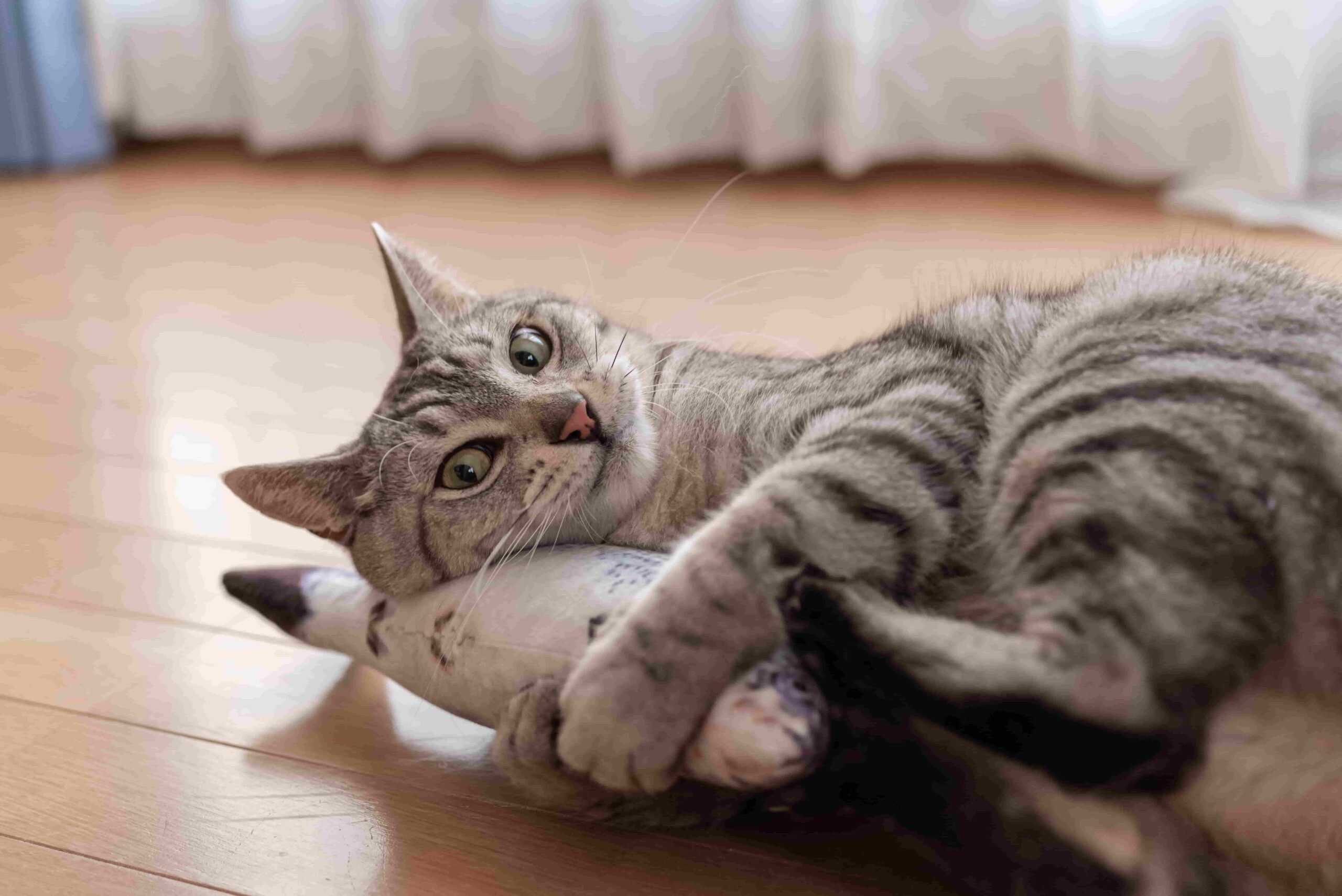
Having a cat is a pleasure, but it is also a responsibility. To keep our pet happy and healthy we need to understand its natural needs and meet them. In this article we look at different aspects of cat care: play, mental stimulation, physical closeness and scent marking. We will try to answer the question: how can you tell your cat is happy? And how do you get it there? Find out how to create the ideal living conditions for your cat and how to build a strong emotional bond.

How can you tell a cat is happy from its purring?

Purring is one of the most recognisable ways a cat expresses joy and contentment. It is worth remembering, though, that cats purr for different reasons, and purring does not always mean the cat is feeling good. So it helps to know the different kinds of purring and learn to tell a positive purr from a negative one. That is not difficult: purring linked to distress or pain sounds quite distinctive, and almost anyone can pick it out intuitively.

The reason we all hope for is simple happiness. When a cat feels happy, it may start purring in the presence of its owner or during play. This is positive purring, and it shows that the cat feels safe and loves its owner. Another cause is relaxation and comfort. Cats often purr while dozing or resting, which reflects their contentment and wellbeing.

What does it mean when a cat rubs against us?

Cats have their own unique ways of spreading their scent and building an emotional bond with their owner. One of these behaviours is rubbing against our legs, body or face. This is a form of scent marking, and it carries several meanings for cats.

Scent marking serves several important functions for cats. First, by rubbing against us, cats leave their pheromones on our skin. Pheromones are chemical substances cats use to communicate with one another. So when a cat rubs against us, it leaves scent marks that tell other cats this is its territory and that it is safe here.

Rubbing against us is also a way of expressing trust and acceptance. Cats choose us as the people they trust and want to cuddle up to. It is their way of building an emotional bond with us. When we accept and tolerate a cat’s scent marking, we show it that we accept it and that it matters to us.

What other behaviour shows that a cat is happy?

There are several behaviours that can signal a cat’s happiness and wellbeing. One of them is a raised tail. If a cat holds its tail high and moves it gently, it is a sign that it feels confident and content. If the tip of the tail is slightly curved, it means the cat is especially cheerful and enthusiastic.

Another behaviour that can indicate a contented cat is bird-watching. Cats love watching birds flying about outside the window. For them it is a fascinating spectacle and, at the same time, a natural outlet for their predatory instinct. If your cat spends a lot of time watching birds and perhaps even reacts to their movements, you can be sure it feels at home in its surroundings.

Bear in mind that every cat has its own preferences when it comes to entertainment. Some cats prefer active games such as chasing a wand toy or running after a ball. Others value mental challenges more, such as puzzles or treat-dispensing toys. It is important to match the type of toy to your cat’s preferences and to offer a variety of entertainment. This lets the cat express its natural instincts and makes it more content.

How do you give a cat a life that meets its natural needs?

It is important to give your cat a life in line with its natural needs. One of the key elements is proper engagement in play. Cats are predators and love to hunt, so it is important to provide toys and activities that stimulate their hunting instincts. You can use wand toys, balls or other interactive toys that let the cat run, jump and hunt. This not only entertains it but also helps burn off excess energy.

Another important matter is a proper place to rest. Cats need their own space where they can relax and feel safe. It is worth having several secluded, draught-free sleeping spots for them. These could be beds, cat houses or even special wall-mounted shelves. The resting place should also be clean and comfortable for the cat.

How can play stimulate a cat’s mind?

Cats are not just animals that love to run and hunt; they are also highly intelligent. That is why it is important to engage them in mental games that get their grey cells working. Pet shops offer plenty of special “puzzle” toys for cats. These toys require the cat to solve a problem or use its senses, so it has to concentrate and think.

One popular type of intelligence toy is the treat dispenser, from which the cat has to extract a treat hidden in hard-to-reach places. Another type is the puzzle board, where the cat has to slide pieces or open compartments to reach the reward. There are also interactive snuffle mats where the cat has to search for food hidden in different pockets.

Why is physical closeness important for a cat’s happiness?

Physical closeness is extremely important for a cat’s happiness. Cats are animals that need contact and closeness with people. Snuggling up to its owner is one of the signs that a cat is feeling good. When a cat jumps onto the sofa or into bed and cuddles up to us, it shows that it feels safe and loves us. It is an expression of trust and of the emotional bond between us.

Cats have different ways of showing they need physical closeness. It might be nuzzling, pressing against our legs, rubbing against our body or even sitting on the keyboard while we work at the computer. These are signals that the cat wants to be close to us and enjoys the time we spend together.

Summary

Owning a cat is a responsibility that includes ensuring its happiness and wellbeing by meeting its natural needs. For a cat to be happy, pay attention to its behaviour: positive purring, a raised tail, rubbing against its owner. It is also important to provide adequate stimulation through play, mental challenges and physical closeness. Cats need a proper resting place, interactive toys and contact with people in order to feel safe and loved, in a word: happy. 
Dog Jumping Up on People: How to Stop It

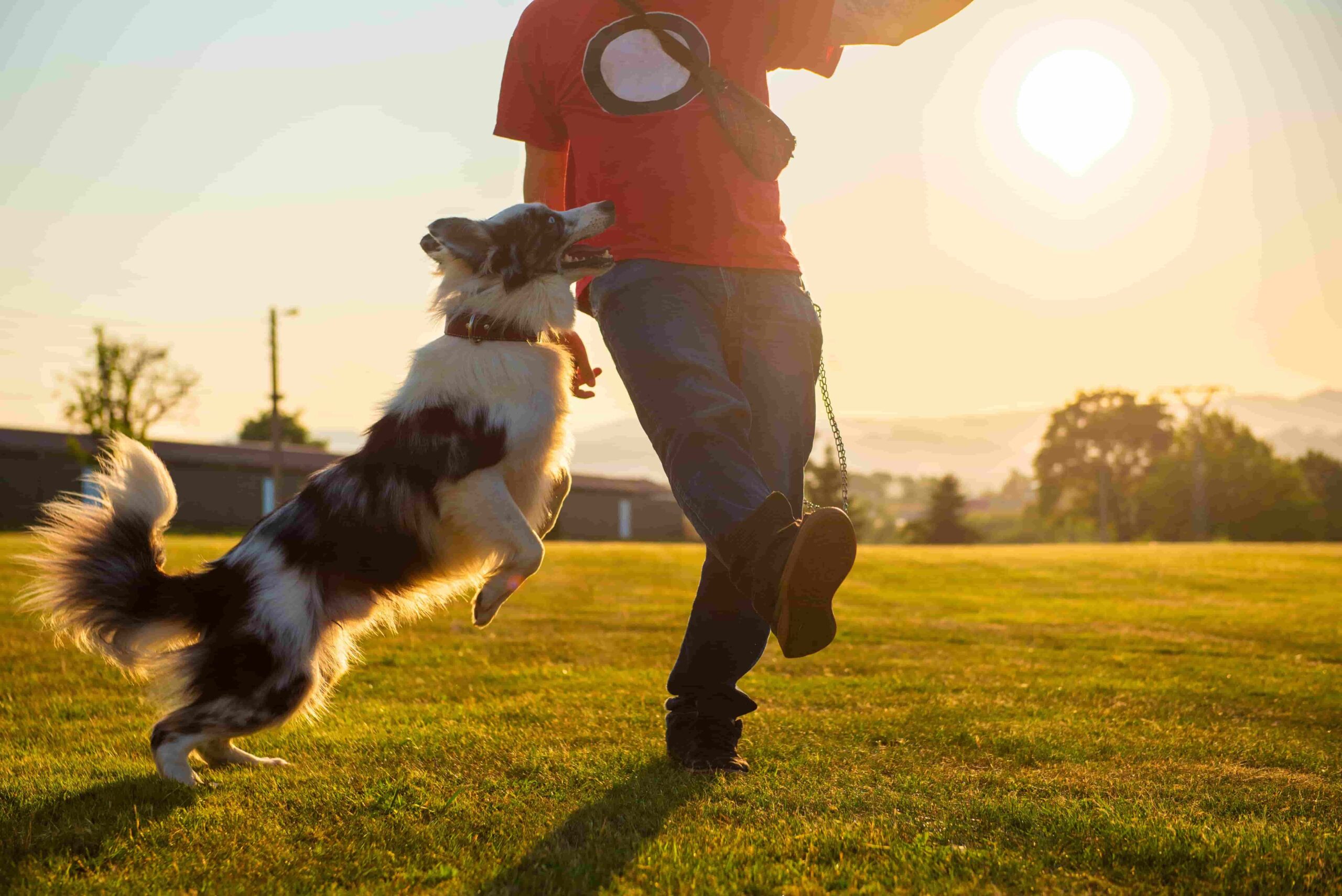
A dog that jumps up on people can be a real headache for many owners. Some people find it funny or even endearing, but for many others, especially children, the elderly or anyone wary of dogs, this behaviour can be dangerous and stressful. That is why it is important to teach your dog that jumping up on people is not acceptable. In this article we look at why dogs jump up, what the consequences are and how to break the habit effectively.

 Why do dogs jump up on people?

Dogs jump up on people for a variety of reasons. One of the main ones is simply to get attention. Dogs are social animals and they need contact with people. Jumping up can be their way of expressing joy, excitement or a wish to play. Another cause is a lack of proper training. If a dog was never taught as a puppy that jumping up is unacceptable, it can easily become a habit.

What are the consequences of a dog jumping up on people?

A dog jumping up on people has consequences both for the dog and for those around it. For the dog it may be a way of expressing emotion, but for people it can be unpleasant and even dangerous. Those who are afraid of dogs may feel threatened and stressed. Children and the elderly are at risk of injury, such as scratches, fractures or other trauma. On top of that, a dog jumping up on people can lead to conflicts with neighbours or others, which sours relationships in the community.

How to stop a dog jumping up on people

Teaching a dog not to jump up on people takes patience, consistency and the right training methods. Below are several effective techniques that can help.

The “four paws on the floor” method

One of the most effective approaches is the “four paws on the floor” method. Every time the dog jumps up, you stop interacting with it and turn away. As soon as the dog has all four paws on the floor, praise and reward it. This way the dog learns that jumping up gets no positive response, while standing on four paws is exactly what you want.

Using cues

Another effective method is to use cues. You can teach your dog “sit” or “down”, which will signal that it should stay on the ground. When the dog obeys the cue, praise and reward it. The dog will learn that following cues brings a positive response.

Positive reinforcement

Positive reinforcement is one of the most effective training methods there is. It means rewarding the dog for desirable behaviour. When the dog is standing on four paws, praise and reward it, for example with a treat or a game. The dog learns that keeping four paws on the floor is desirable and pays off.

Avoiding punishment

Punishment-based training means penalising the dog for unwanted behaviour. This approach is not recommended, as it can cause stress and anxiety in the dog. It is far better to focus on positive reinforcement and reward the dog for the behaviour you want.

Enough physical and mental exercise

Dogs that are properly tired out, both physically and mentally, are less inclined to jump up on people. So it is important to give your dog enough exercise and mental stimulation. Regular walks, play and training sessions help burn off excess energy and reduce the urge to jump.

Consulting a trainer or vet

If your dog keeps jumping up on people despite all these methods, it may be time to consult a professional trainer or a veterinarian. A specialist can help identify the causes of the behaviour and suggest effective training methods.

Summary

A dog that jumps up on people can be a problem for many owners. With the right training methods and some patience, however, you can teach your dog that jumping up is not acceptable. The key is to focus on positive reinforcement and reward the dog for desirable behaviour. Making sure the dog gets enough physical and mental exercise will also reduce its urge to jump. If the dog still jumps up despite everything, it may be worth consulting a professional dog trainer. With the right approach and patience you can successfully stop your dog jumping up on people and give it a happy, safe life.

Paralysis and paresis of the legs in dogs: what you need to know

What is the difference between paralysis and paresis of the limbs in dogs?

Paralysis is the complete inability to move a limb, meaning the animal cannot move it at all. Paresis is a reduced range of movement. The term is also used to describe reduced muscle strength. Paresis can be an intermediate state between normal limb function and  paralysis. Most owners associate both conditions with an orthopaedic problem, but more often they are neurological and linked to damage within the nervous system. 

What can cause paralysis and paresis of the limbs in dogs?

Both problems may require help from a neurologist as well as an orthopaedic specialist. There are many possible causes, so the history given by the owner and a specialist examination play a key role. The most common problems include:

  • spinal cord injury
  •  genetic defects
  • osteoarthritis
  • neurological diseases 
  • infectious diseases

The size or breed of the dog makes no difference, as this problem can affect small and large dogs alike. 

How are paresis and paralysis diagnosed? 

The best first step is to contact a neurologist straight away. After examining the dog, the vet may order additional neurological tests such as an MRI or CT scan to obtain a detailed picture of the brain, spinal cord and spine. Assessing the limb’s range of movement and whether the patient can feel pain is crucial here.

Additional blood tests are carried out if an infectious disease is suspected, as this too can cause paresis or paralysis.

How is a dog with paralysis or paresis treated?

Treatment depends on the diagnosed cause of the condition. Sometimes surgery is needed, while in other cases medication alone is used. Physiotherapy for dogs is an invaluable aid in cases of paresis or paralysis. An animal physiotherapist will devise an exercise plan suited to the patient’s condition to better support the muscles of the affected limb. 

If the changes cannot be reversed, there are special wheelchairs for dogs, as well as support harnesses and slings. 

Summary

Depending on what caused the problem with moving the limb, vets may be able to reverse it. Unfortunately, this is not always possible, which is why assistive devices exist for such dogs.

Whatever may have happened, if you notice your dog having trouble moving, take it to a vet for examination straight away. Paresis is a symptom that is easy to spot, and sometimes the time between the first sign and medical attention is critical. If any of the problems described above occurs, do not wait, contact our clinic.