

-

Parasitic diseases in rabbits: the commonest threats and how to prevent them
Coccidiosis, encephalitozoonosis, ear mange and cheyletiellosis are the parasitic diseases pet rabbits meet most often, and they can go unnoticed for a long time. We explain how they are diagnosed in the laboratory, how they are treated, and which hygiene, quarantine and feeding rules keep infection at bay.
-

How to protect your dog’s paws in winter
Frost, ice and road salt leave a dog's pads irritated, cracked and sometimes frostbitten every winter. We explain how to pick a route and a protective wax before the walk, how to rinse and dry the paws properly once you are home, and which signs mean it is time to call the veterinary clinic.
-

Horner’s syndrome in dogs and cats: signs, causes, diagnosis and treatment
A drooping eyelid, a smaller pupil and a visible third eyelid on one side add up to Horner's syndrome. It is not painful in itself and does not harm sight, but it often signals another, more serious condition underneath. We explain the causes, the diagnostic steps, the pharmacological tests and the treatment options.
Spondylosis in dogs: symptoms, treatment, causes of spinal degeneration and rehabilitation
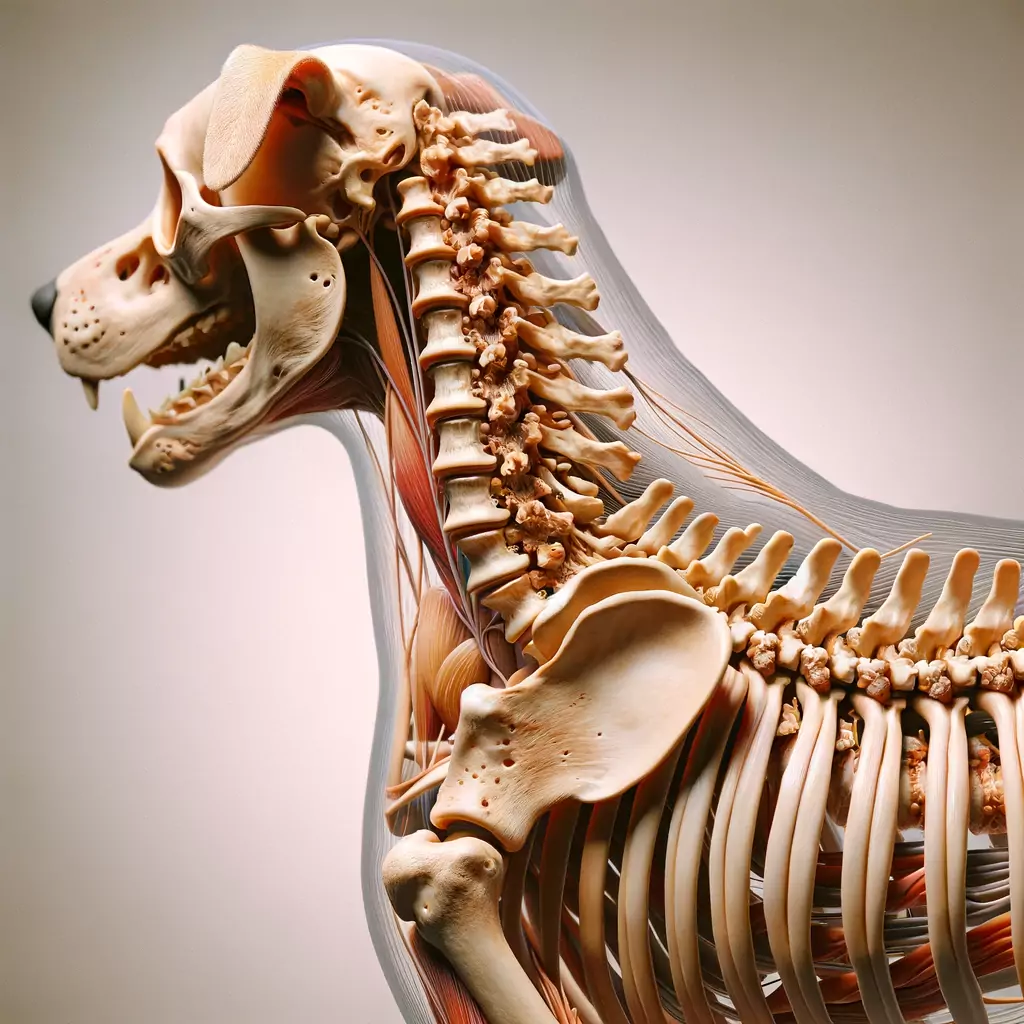
The health of our four-legged friends matters just as much as our own, and that includes the health of their spine. Spondylosis, a degenerative disease of the spine, can affect our pets too, causing pain and restricting their movement. In this article we take a closer look at what the disease is, what its main causes are and which symptoms may suggest that your dog has it. We also discuss the treatment options available, the ways you can support your dog in coping with the condition, and the outlook for dogs diagnosed with spondylosis. Our aim is to give owners the full picture, so that they can understand the disease and take the right steps to give their dog the best possible quality of life.
Spondylosis in dogs: what is it and what causes it?
Veterinary specialists point out that spondylosis in dogs (more precisely spondylosis deformans) is a progressive disease of the spine that mainly affects older animals, although it can also occur in younger dogs. It is characterised by the formation of bony outgrowths along the edges of the vertebrae, which can lead to pain, restricted mobility and, in extreme cases, paralysis.
The causes of this degeneration are varied and include genetic factors as well as excess weight, an unsuitable diet, too little or too much exercise, stress and injuries, all of which accelerate degenerative changes. It is worth stressing, however, that the exact factors behind the disease are not fully understood. Spondylosis affects dogs of different breeds and sizes, although it was once thought to be mainly a problem of larger dogs. Current research suggests that, with age, almost any older dog can develop the disease, particularly after the age of eight to ten. Breed predisposition also plays a part: around 3% of Labradors, 20% of Boxers and 40% of German Shepherds are affected. Interestingly, the disease used to be diagnosed less often, which may have been down to dogs’ shorter average lifespan.
Expert advice is that the key to preventing spondylosis is keeping your dog in good physical condition and feeding a balanced diet. Regular veterinary check-ups, especially for breeds prone to spinal problems, go a long way towards detecting problems early and starting the right treatment. Early diagnosis and adapting your dog’s lifestyle to its health needs are essential for easing the symptoms and giving the animal the best possible quality of life.
Symptoms and diagnosis of spondylosis in dogs
Diagnosing spondylosis in dogs requires careful observation and diagnostic tests. Symptoms that may point to degenerative changes in the spine include restricted mobility, obvious pain when the spine is touched, difficulty getting up and changes in the way the dog walks. If spondylosis is suspected, an X-ray of the spine is essential, as it can reveal the characteristic degenerative changes. The disease is often discovered by chance, for example during a routine abdominal examination.
The symptoms of spondylosis in dogs can vary depending on how advanced the disease is and which part of the body is affected. Here are the most common signs:
It is important to see a vet at the first sign of any of these symptoms, so that an accurate diagnosis can be made and a suitable treatment plan put in place.
Spondylosis in dogs: treatment. Can a dog with the disease be helped?
Supporting a dog with spondylosis calls for a comprehensive approach that may involve both medication and changes to the animal’s daily routine. As a rule, however, spondylosis cannot be cured. Treatment of spondylosis in dogs focuses on relieving the symptoms and slowing the progression of the disease, as it is a chronic condition that responds poorly to medication. The main ways of managing the disease are anti-inflammatory drugs and painkillers, which ease the dog’s day-to-day discomfort. These are combined with joint supplements, physiotherapy and a diet that helps the dog maintain an optimal body weight. Although surgery is technically possible, it is usually advised against because of the risks associated with the dogs’ age and its limited effectiveness.
Spondylosis in dogs is treated with non-steroidal and steroidal anti-inflammatory drugs, often applied locally. Regenerative therapy, such as the IRAP method, can also help. Dietary supplements rich in chondroitin, hyaluronic acid or glycosaminoglycans are recommended.
Spondylosis in dogs: rehabilitation
Support for dogs with spondylosis also includes individually tailored rehabilitation programmes, which can significantly improve the animal’s quality of life by reducing pain and improving mobility. Therapies such as laser therapy and hydrotherapy are worth considering, as they can relieve symptoms without resorting to invasive treatment. Regular veterinary check-ups and adapting the dog’s lifestyle to its needs are essential for giving a dog with spondylosis the best possible living conditions.
Hydrotherapy is a form of rehabilitation that uses water to treat and improve the physical condition of animals, including dogs with conditions such as spondylosis. Exercising in water helps take the strain off the joints and spine while strengthening the muscles and improving range of motion. Water provides natural resistance, which makes it easier to build muscle strength without the risk of further damage. Hydrotherapy is particularly recommended for dogs with degenerative diseases, as it can greatly improve their mobility and quality of life. For degenerative changes in the spine, sessions on an underwater treadmill are used, which help strengthen the muscles along the spine and, like any well-chosen form of exercise, improve the dog’s overall fitness.
By contrast, laser therapy uses laser radiation to warm the tissue, which relieves pain, promotes angiogenesis and tissue healing, and helps restore proper nutrition of the cartilage. Thanks to these properties, laser therapy is a valuable tool for easing the symptoms of degenerative changes, offering a non-contact, non-invasive form of treatment that can significantly improve the quality of life of dogs with spondylosis.
What is the prognosis for this disease?
The prognosis for dogs with spondylosis depends on many factors, including how advanced the disease is and how quickly appropriate treatment is started. Owners should be aware that, although spondylosis is a progressive condition, with proper management a dog can maintain a good quality of life. Here are a few key points about the prognosis:
Remember that every case is different, and working closely with your vet is key to giving a dog with spondylosis the best possible care.
Frequently asked questions
Is spondylosis in dogs hereditary?
No, spondylosis in dogs is not considered a hereditary disease. It is a degenerative disease of the spine that develops as a result of ageing, injury or excessive strain on the joints.
How can I prevent spondylosis in my dog?
Preventing spondylosis in dogs mainly comes down to keeping your dog at a healthy weight, making sure it gets enough exercise and avoiding excessive strain on the spine. Regular health checks at the vet are also important.
Does diet affect the development of spondylosis in dogs?
Yes, diet can affect the development of spondylosis in dogs. A balanced diet rich in nutrients that support joint health, such as omega-3 fatty acids, can help delay degenerative processes.
Can spondylosis in dogs lead to paralysis?
In advanced cases of spondylosis, where the spinal nerves are significantly damaged, serious movement disorders, including paralysis, can occur. It is worth noting, however, that this is relatively rare and depends on the location and severity of the disease.
Is physiotherapy a treatment for spondylosis in dogs?
Yes, physiotherapy in the broad sense is one of the recommended treatments for spondylosis in dogs. Regular exercise tailored to the dog’s condition can greatly improve its comfort by reducing pain and improving joint mobility.