Contact us Make an appointment

What Is Entropion in Dogs and Cats?

What is entropion in dogs and cats?

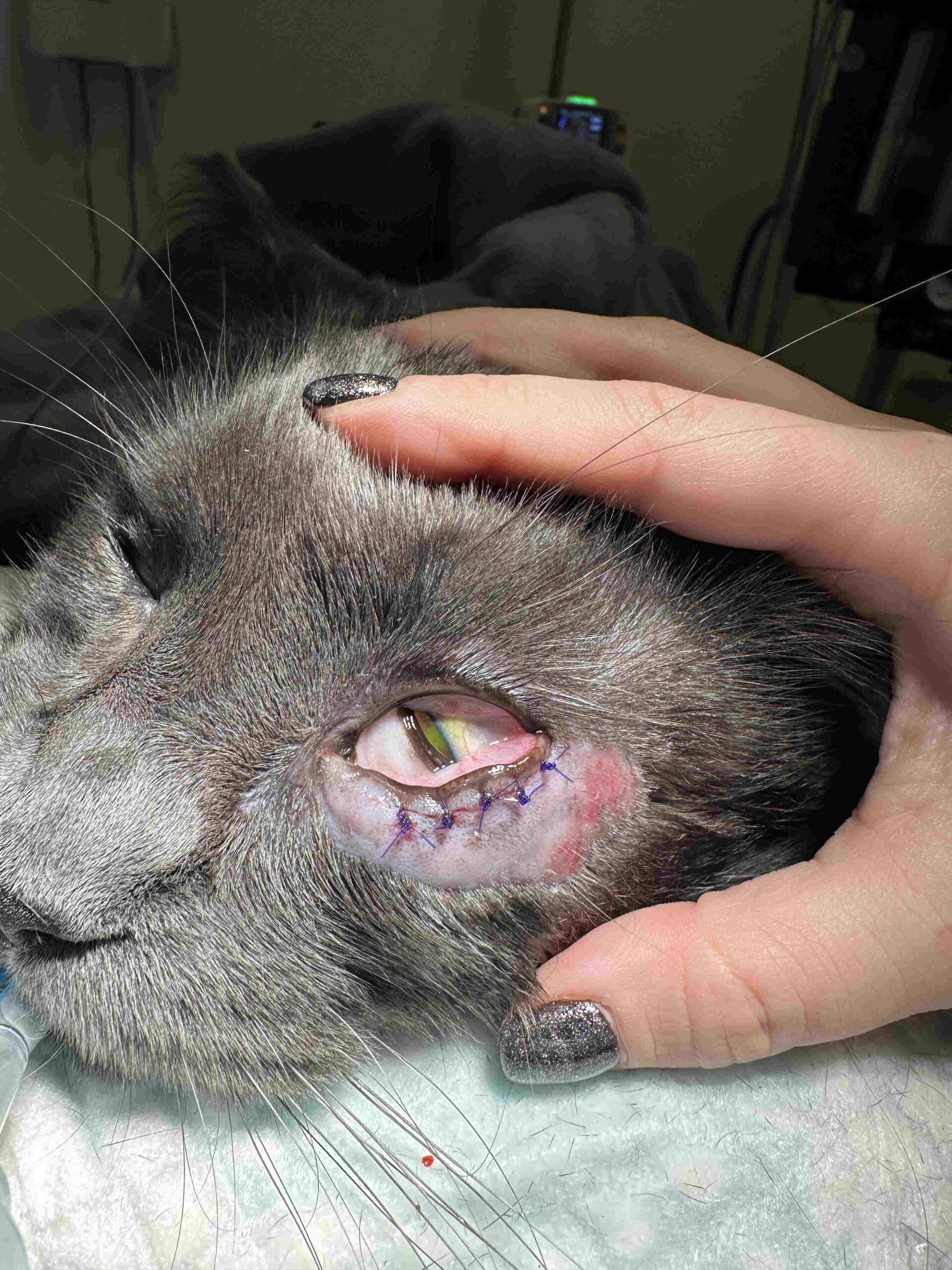
Entropion is an inward rolling of the eyelid towards the eye. It most often affects the lower lid, causing constant irritation of the eyeball by the lashes and the fur growing on the outer surface of the lid. Left untreated, it causes watering, ulceration and even loss of sight! 

What causes entropion?

The condition can occur in both dogs and cats. Entropion can be caused by a congenital defect (the animal may have been born with it), breed predisposition, muscle spasm resulting from pain due to another eye problem, or age and the loss of skin elasticity around the face. Breeds predisposed to entropion include, among others:

  • Maine Coon, 
  • Persian,
  • British Shorthair,
  • Shih Tzu, 
  • pug,
  • French bulldog, 
  • Pekingese, 
  • cocker spaniel,
  • Shar Pei, 
  • Bernese mountain dog, 
  • golden retriever, 
  • Labrador 

What are the symptoms of entropion?

Among the first noticeable signs are reddening of the conjunctiva and heavy watering, caused by the lashes and fur irritating the eye. Depending on the severity of the problem, the rolled-in eyelid is visible. A corneal ulcer may also be seen. Animals may be listless, because the condition is painful.

What can be done about entropion in a dog or cat?

The standard approach to this condition is surgical correction of the eyelids. This involves removing a strip of skin below the lash line. The risk of the procedure failing is small, but it can happen that once the wound has healed the incision turns out to have been too small, in which case the procedure has to be repeated. 

Patients have to wear a protective collar to safeguard the stitches and the surgical site. No eye drops are required. 

It is important, however, to keep to the dates of follow-up visits. At Zviropolis the first check-up is 2-3 days after surgery, and the next 10 days after, to assess how the wound is healing. 

Summary

The most important thing is to find the cause of the entropion. If the rolled-in eyelid has led to complications, the entropion must be corrected first and the resulting damage treated afterwards. Owners should bear in mind that an animal with this defect must not be bred from, and if it has already had offspring, it is likely that the litter may also be affected by the condition.
What Is Cardiomyopathy in Cats?

What is cardiomyopathy in cats?

Cardiomyopathy is a heart disease in which irreversible changes take place in the heart muscle. The muscle cells become disorganised and lose their tone, which impairs their contractility and elasticity. Their shape and size also change. The heart becomes weakened and struggles to pump blood. The disease can affect both pedigree cats and ordinary moggies, although certain breeds are predisposed to it. 

What is hypertrophic cardiomyopathy?

The disease is also known by the abbreviation HCM, and it is the most common of all the types of cardiomyopathy. It involves the wall of the left ventricle thickening inwards. The result is a reduction in the volume of the ventricle, referred to in veterinary medicine as a narrowing of the ventricular lumen. Enlargement of the left atrium can also be a cause. 

What is dilated cardiomyopathy?

Dilated cardiomyopathy (DCM) involves weakening and enlargement of the heart muscle. All the atria and ventricles of the heart become dilated. This makes it very hard for the heart to work and to pump blood. The disease is far more common in dogs than in cats. 

How is cardiomyopathy diagnosed?

Cardiomyopathy in a cat can be diagnosed with an echocardiogram. The vet assesses the outline of the heart and its ventricles and atria. The lungs are also assessed, both by auscultation and visually. To confirm hypertrophic cardiomyopathy beyond doubt, blood tests can be run whose parameters indicate the risk of the disease developing. If you own a cat of a predisposed breed, the most important thing is routine veterinary check-ups and screening.

What are the symptoms of heart disease in cats?

The most common heart-related signs include:

  • weakness
  • tiring quickly
  • reluctance to move
  • fainting
  • loss of appetite 
  • pallor (visible on the conjunctiva or paw pads)
  • a swollen abdomen

How is cardiomyopathy in cats treated?

Treating cardiomyopathy in cats involves giving medication that improves the strength of the heart muscle’s contractions. It has to be remembered that the disease cannot be cured; medication can only slow its progression, which is why early detection is key.

Which breeds are predisposed to cardiomyopathy?

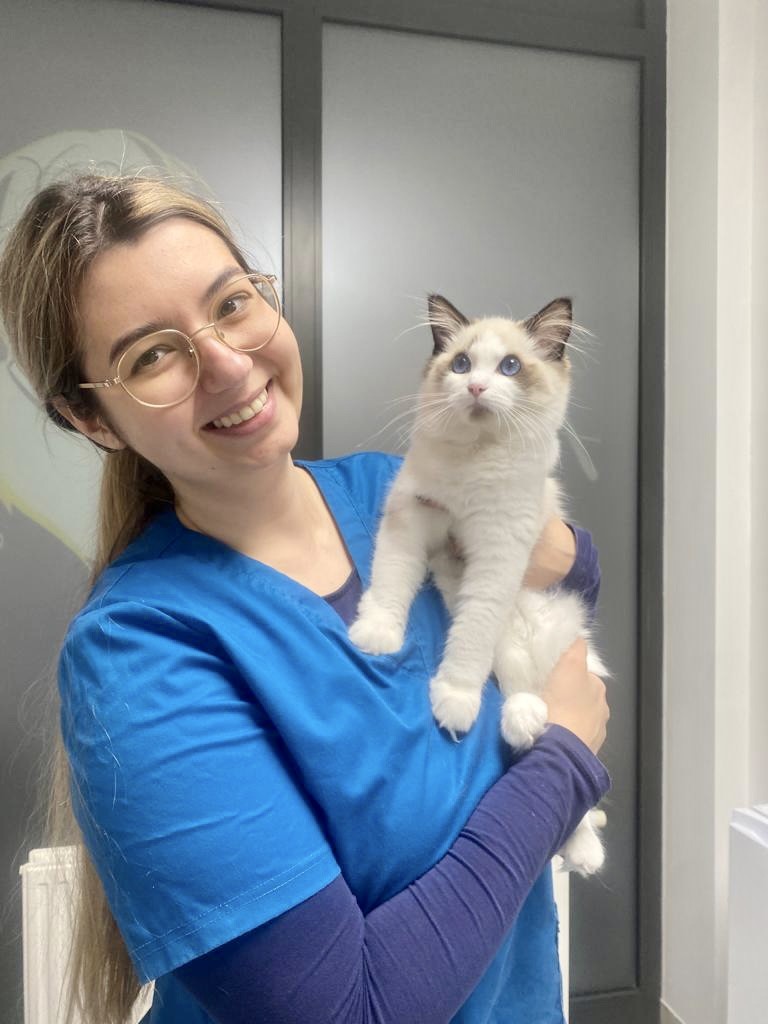
Interestingly, in Maine Coon and Ragdoll cats the disease is genetic, meaning that every individual carrying the gene mutation is affected to some degree. Cats carrying this gene must not be bred, but even cats that do not carry it can produce offspring in which the gene is present. Moggies can also suffer from the condition; they are by no means exempt. Other breeds at risk are:

  • Norwegian Forest cat
  • British Shorthair
  • Persian
  • Bengal
  • Siamese
  • Devon Rex
  • Sphynx
  • Siberian 

Summary:

Routine screening is the foundation for starting treatment early and, in turn, extending your pet’s life in comfort. If your cat comes from a breeder, check the parents’ test results; unfortunately this does not give a cast-iron guarantee that the disease will not occur, but it does make it less likely. 

Mixed-breed cats, or moggies, can also be affected by cardiomyopathy, so regular veterinary visits are a cornerstone of caring for any animal.

What You Need to Know About Blood Transfusions in Animals

What is a blood transfusion in animals?

Just as in human medicine, blood transfusions are also carried out in veterinary practice. The whole process is broadly similar to that in people, with a few minor differences. A transfusion is given when the haematocrit, the percentage of the blood made up of red blood cells, falls well below normal. In veterinary medicine there is a threshold value at which a transfusion is required. 

When does a dog or cat need a blood transfusion?

The decision to transfuse always rests with the attending veterinarian, who knows the animal’s history and current test results. Situations in which transfusions are given include a drop in red blood cell numbers as a result of a tick-borne or infectious disease, after major surgery, or when internal organs have been damaged by trauma. These are just a few examples of when donor blood may be needed. 

How often can a dog or cat be given a transfusion?

The key considerations here are the patient’s clinical condition and test results. There is no fixed time limit, but it should be remembered that there is always a risk of the patient reacting adversely to the blood or blood product being given. 

Do dogs and cats have blood groups?

Both dogs and cats have their own blood groups. In veterinary medicine, as many as 13 blood group variants are recognised in dogs! Cats have only 3 blood groups, but transfusions in cats carry a higher risk of failure. 

There are dedicated blood banks that hold units of blood and blood products. Their availability depends on the number of donors. Animals have to pass a screening process and meet certain criteria in order to become blood donors. 

What does a blood transfusion in animals involve?

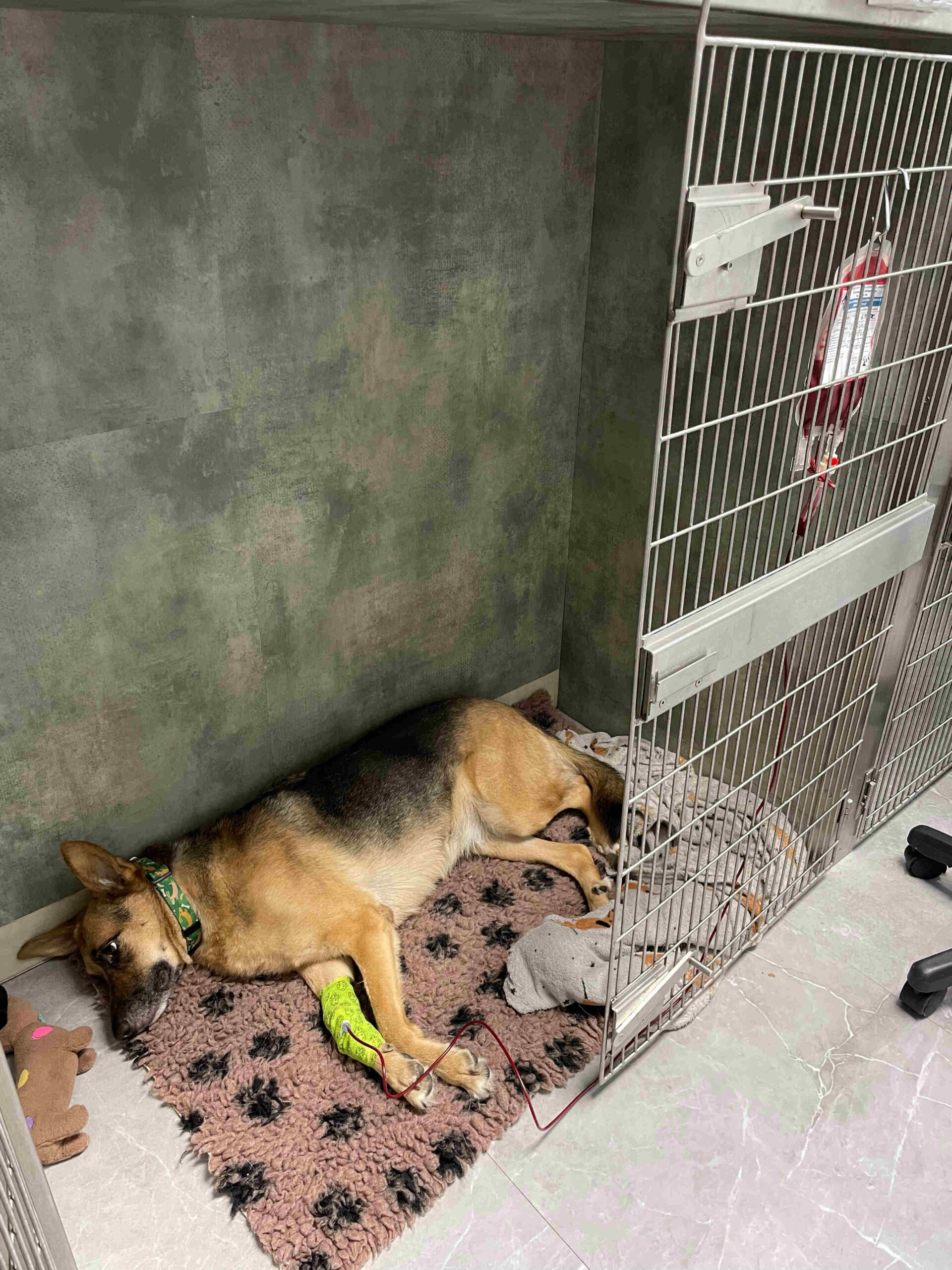
The procedure itself is similar to that in humans. First, a donor has to be found who meets the criteria and can give blood. This usually takes place in clinics equipped for blood collection or directly at blood banks. The prepared unit of blood is connected to the patient much like a drip of fluids. How long the transfusion takes depends on the volume of blood being given. It is usually a matter of tens of minutes, and throughout that time the patient must be continuously monitored by clinic staff. 

Summary

Blood transfusion is a major advance in veterinary medicine and makes it possible to save animals in critical condition. It should always be remembered that giving donor blood carries risks and the body may react adversely, but a transfusion can sometimes be the only way out of a given problem. After the procedure the animal needs to be observed at a 24-hour facility, with its blood parameters monitored for several more days.