

-

Parasitic diseases in rabbits: the commonest threats and how to prevent them
Coccidiosis, encephalitozoonosis, ear mange and cheyletiellosis are the parasitic diseases pet rabbits meet most often, and they can go unnoticed for a long time. We explain how they are diagnosed in the laboratory, how they are treated, and which hygiene, quarantine and feeding rules keep infection at bay.
-

How to protect your dog’s paws in winter
Frost, ice and road salt leave a dog's pads irritated, cracked and sometimes frostbitten every winter. We explain how to pick a route and a protective wax before the walk, how to rinse and dry the paws properly once you are home, and which signs mean it is time to call the veterinary clinic.
-

Horner’s syndrome in dogs and cats: signs, causes, diagnosis and treatment
A drooping eyelid, a smaller pupil and a visible third eyelid on one side add up to Horner's syndrome. It is not painful in itself and does not harm sight, but it often signals another, more serious condition underneath. We explain the causes, the diagnostic steps, the pharmacological tests and the treatment options.
Why do rodents run in exercise wheels?
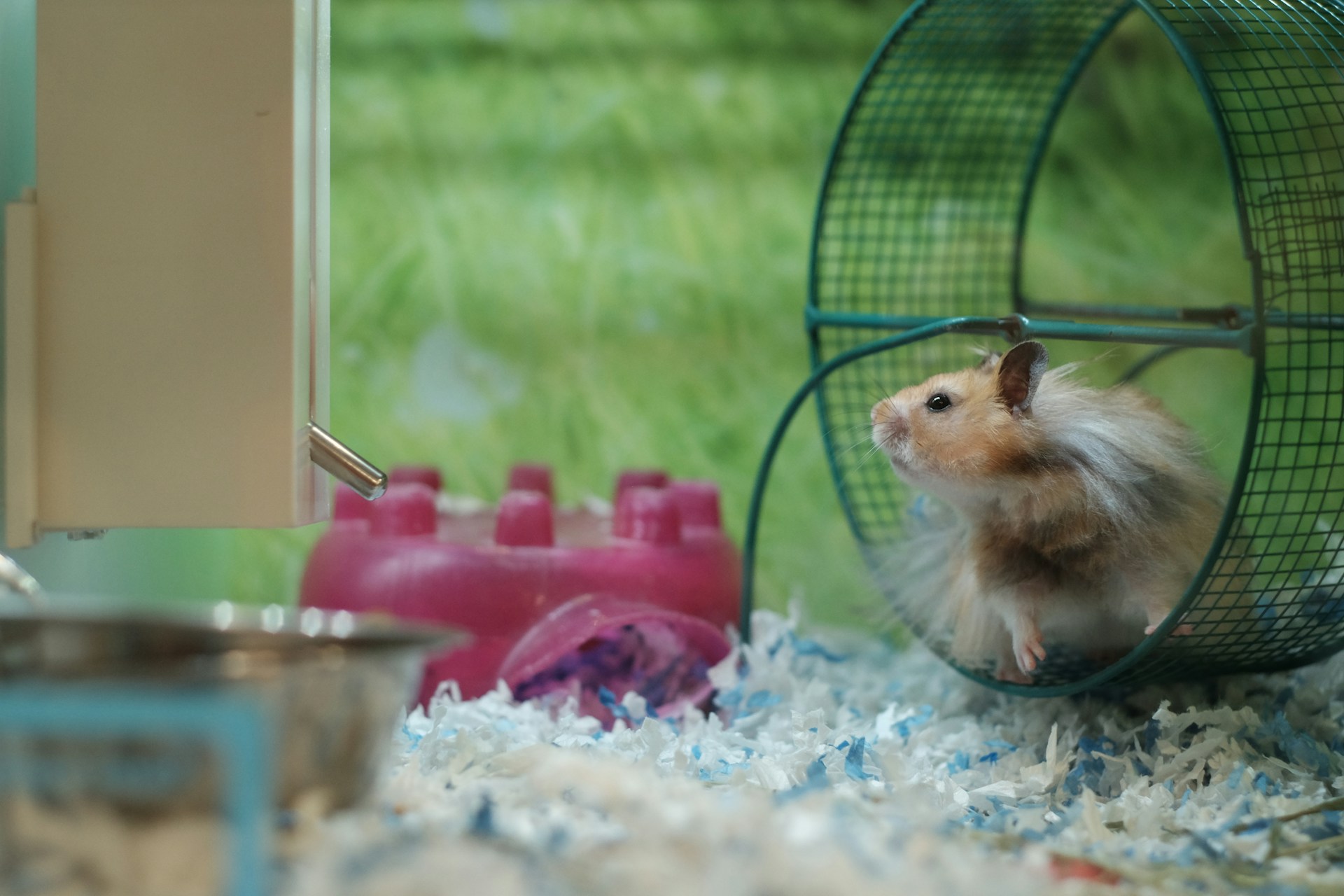
Rodents such as hamsters and degus have natural instincts that drive them to run and explore their surroundings. In the wild their lives revolve around activity, foraging for food and evading predators. An exercise wheel is an excellent way for them to satisfy these innate needs. Running in a wheel lets rodents act on their hunting instincts and get the physical exercise that is essential to their health and wellbeing. The activity a wheel provides helps them maintain a healthy body weight, improves the condition of the heart and circulation, and aids digestion. Running in a wheel can also work as a form of mental stimulation, since it requires the animal to concentrate and think creatively, which matters for its overall wellbeing. In this way the wheel becomes not merely a source of movement but a means of giving rodents a healthy, active life.
Why the wrong wheel can cause health problems
If a wheel is too small, rodents are forced to run in an awkward, unnatural posture, which can injure the spine and strain the joints. Too little running space also limits their natural range of movement, making the exercise less comfortable and less effective.
What is more, wheels with rigid or hard running surfaces can chafe and irritate the feet, and in some cases even cause injury. Rodents can also hurt themselves if the wheel lacks proper safeguards, such as mesh or side guards that stop them slipping into gaps. The noise made by a poor-quality wheel whose parts rub together can cause stress and anxiety, disrupting the animal’s natural rhythm of sleep and activity. A badly chosen wheel fails to provide enough physical and mental stimulation, which can lead to obesity, low mood and behavioural problems such as excessive aggression or nervousness. That is why it is important to choose a wheel carefully, to suit your rodent’s needs and protect its health and wellbeing.
Types of exercise wheel available
How to choose the right wheel for your rodent
How to tell that the wheel is the wrong one
Spotting that a wheel does not suit your rodent takes some observation of its behaviour and condition. First of all, if the animal seems to avoid using the wheel, that may be a sign it does not feel comfortable in it. Signs such as reluctance to run, placing the feet awkwardly or jumping straight back out may point to the wrong size of wheel. What is more, if the rodent appears to struggle with its balance or its running looks uneven, the wheel is probably too small or unstable. It is also worth checking the animal’s feet for chafing or sores, which suggest the running surface is too hard. Sometimes the noise a wheel makes in use also indicates poor build quality, which can leave the rodent stressed. If any of these problems appear, consider replacing the wheel with a more suitable model that will keep your rodent comfortable and safe while it plays.