

-

Parasitic diseases in rabbits: the commonest threats and how to prevent them
Coccidiosis, encephalitozoonosis, ear mange and cheyletiellosis are the parasitic diseases pet rabbits meet most often, and they can go unnoticed for a long time. We explain how they are diagnosed in the laboratory, how they are treated, and which hygiene, quarantine and feeding rules keep infection at bay.
-

How to protect your dog’s paws in winter
Frost, ice and road salt leave a dog's pads irritated, cracked and sometimes frostbitten every winter. We explain how to pick a route and a protective wax before the walk, how to rinse and dry the paws properly once you are home, and which signs mean it is time to call the veterinary clinic.
-

Horner’s syndrome in dogs and cats: signs, causes, diagnosis and treatment
A drooping eyelid, a smaller pupil and a visible third eyelid on one side add up to Horner's syndrome. It is not painful in itself and does not harm sight, but it often signals another, more serious condition underneath. We explain the causes, the diagnostic steps, the pharmacological tests and the treatment options.
Obesity in cats: a global epidemic and a silent threat to health
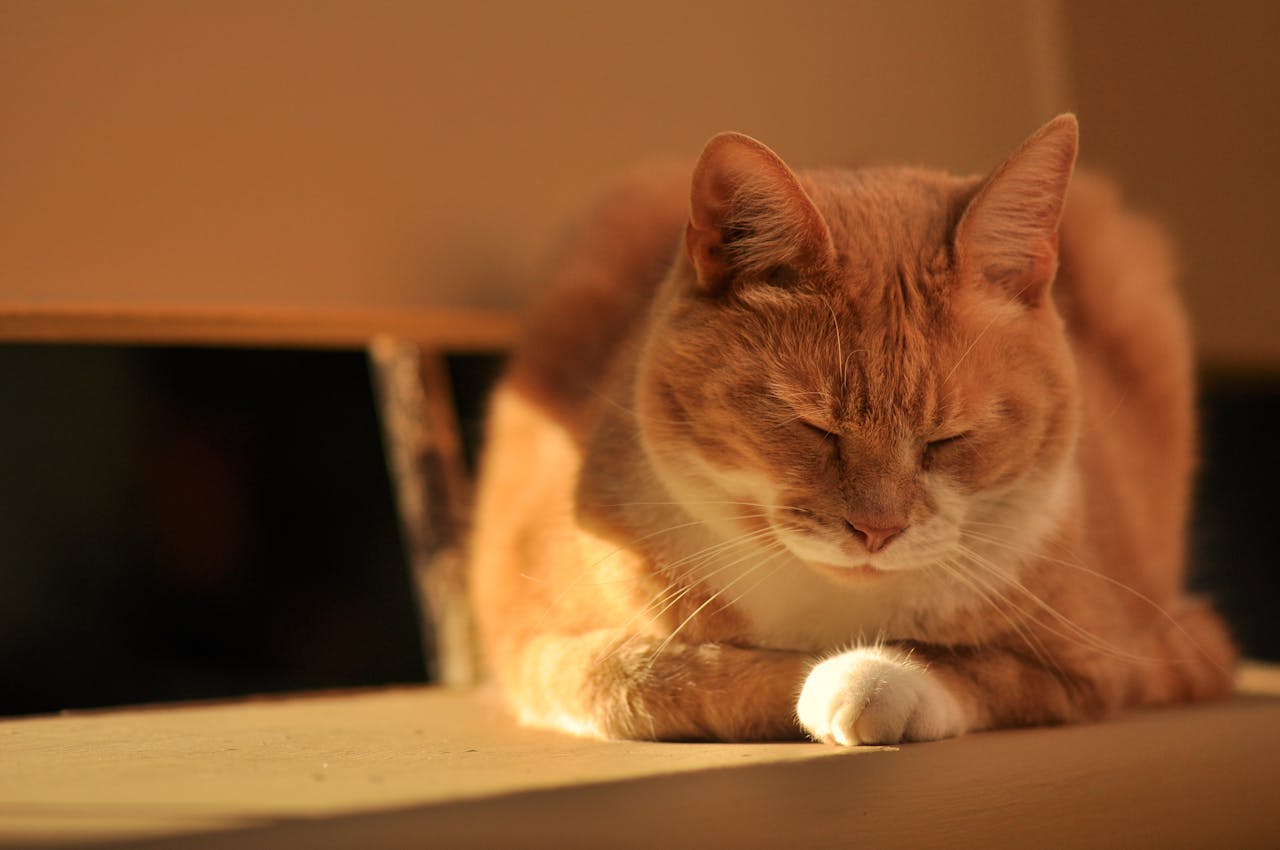
Obesity is now the most common metabolic disorder in domestic cats. It is estimated that between 30% and 60% of cats living in our homes are carrying extra weight. A “fluffy” cat may look endearing, but veterinary medicine (in line with WSAVA and AAFP standards) is unambiguous about it: obesity is a chronic inflammatory disease that drastically lowers quality of life and shortens it.
Knowing how to spot the problem, how to take weight off safely and why “slimming by eye” can be dangerous — even fatal — is the foundation of responsible cat care.
How to tell whether your cat is obese: the BCS scale
Vets do not judge body weight by the scales alone; they rely above all on the BCS (Body Condition Score), most often in its 9-point version. It gives an objective assessment of body fat regardless of the animal’s skeletal frame.
A simple test at home: run your hands gently along the sides of your cat’s chest, without pressing, and try to feel the ribs. If you cannot find them, your cat needs a change of diet.
Why do cats put on weight? The positive energy balance
The basic cause of obesity is a positive energy balance: more calories go in than are used up. In cats, however, several key factors shape how this plays out:
The risks: why obesity is an inflammatory state
Fat is not a passive energy store — it is an active secretory organ that produces pro-inflammatory cytokines. Obesity in a cat means the body is permanently inflamed, which leads to:
How much should a cat eat? The arithmetic of weight loss
Effective weight loss calls for precision. Veterinarians work out a cat’s resting energy requirement (RER — Resting Energy Requirement) using the formula:
$$RER = 70 times (text{body weight in kg})^{0,75}$$
An example: a 5 kg cat has an RER of roughly 234 kcal. During a weight-loss programme the vet sets the diet at about 60–80% of that figure — say 180–190 kcal a day. Remember: weighing the food on kitchen scales, to the gram, is the only method that genuinely works. Measuring cups can be up to 20% out.
The golden rules of safe weight reduction
The most important rule is a safe pace. A cat must not lose weight rapidly, because that risks the hepatic lipidosis described above.
Active feeding and hunting stimulation
A calorie deficit is only half the battle. To get the metabolism going you also need movement — but movement that suits a cat’s nature.
Prevention: better than cure
If your cat is at a healthy weight, do everything you can to keep it there. Slimming down an obese cat takes months, whereas prevention needs nothing more than discipline:
Remember that any weight-loss diet should be discussed with a veterinarian or a veterinary nutritionist, so that your cat does not run short of key nutrients such as taurine or the B vitamins.
Based on WSAVA, AAFP and ESVCN guidelines.