

-

Parasitic diseases in rabbits: the commonest threats and how to prevent them
Coccidiosis, encephalitozoonosis, ear mange and cheyletiellosis are the parasitic diseases pet rabbits meet most often, and they can go unnoticed for a long time. We explain how they are diagnosed in the laboratory, how they are treated, and which hygiene, quarantine and feeding rules keep infection at bay.
-

How to protect your dog’s paws in winter
Frost, ice and road salt leave a dog's pads irritated, cracked and sometimes frostbitten every winter. We explain how to pick a route and a protective wax before the walk, how to rinse and dry the paws properly once you are home, and which signs mean it is time to call the veterinary clinic.
-

Horner’s syndrome in dogs and cats: signs, causes, diagnosis and treatment
A drooping eyelid, a smaller pupil and a visible third eyelid on one side add up to Horner's syndrome. It is not painful in itself and does not harm sight, but it often signals another, more serious condition underneath. We explain the causes, the diagnostic steps, the pharmacological tests and the treatment options.
Imaging diagnostics
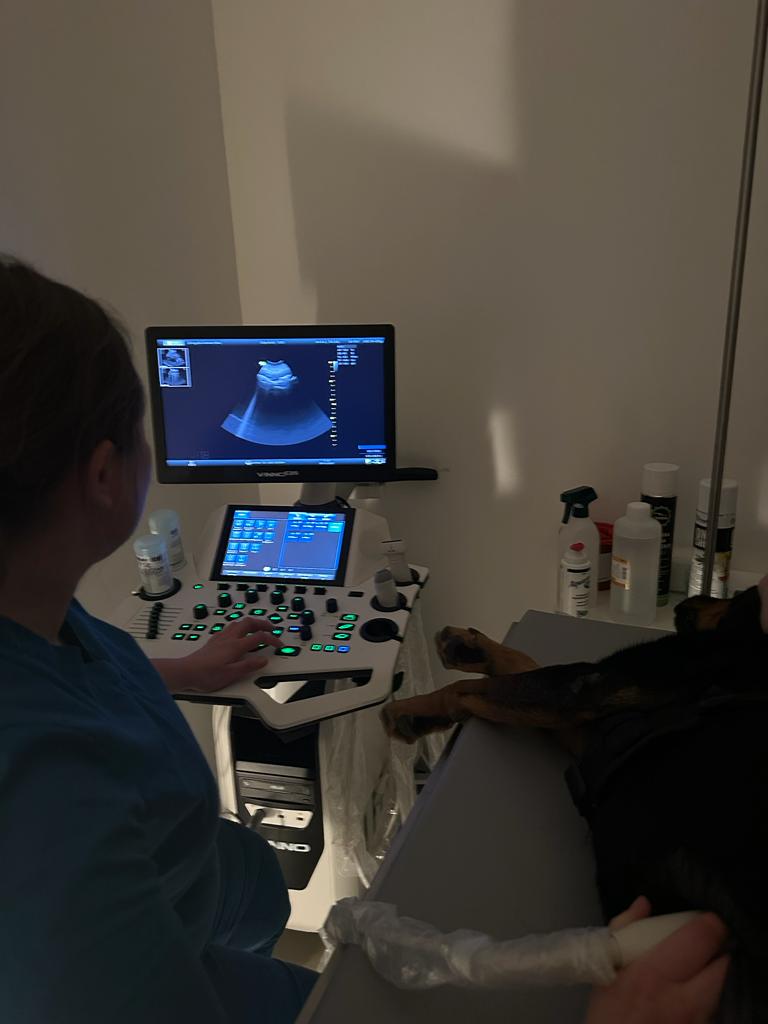
Imaging diagnostics is the process of using various imaging technologies and techniques, such as X-ray imaging, ultrasound imaging and MRI, to obtain images of your pet’s internal organs and tissues. These images are used to prevent and treat disease and to monitor the animal’s condition during treatment.
Diagnostic imaging is an integral part of the prevention and treatment of animals. It allows the doctor to get a more accurate picture of the animal’s health condition, which can help identify possible diseases or problems in advance and start treatment earlier, which can be crucial for the animal.
Modern ultrasound and X-ray machines are the most commonly used diagnostic imaging technologies in veterinary medicine. Ultrasound is used to produce images of internal organs and tissues using sound waves. It is a non-invasive method that produces detailed images without harming the animal.
X-ray diagnosis is used to produce images of the skeleton and internal organs using X-rays. This method is often used to diagnose bone and joint diseases and to detect tumors and other abnormalities in organs and tissues.
In Zviropolis we have UNIT X-ray and dental equipment, which provides high-quality images and guarantees accurate diagnosis of diseases. This equipment has many advantages, including high image clarity, fast scanning times and the ability to adjust various parameters to obtain the best results.
In summary, diagnostic imaging plays an important role in the prevention and treatment of animals. It allows doctors to get a more accurate picture of the animal’s health and prevent possible diseases!