

-

Parasitic diseases in rabbits: the commonest threats and how to prevent them
Coccidiosis, encephalitozoonosis, ear mange and cheyletiellosis are the parasitic diseases pet rabbits meet most often, and they can go unnoticed for a long time. We explain how they are diagnosed in the laboratory, how they are treated, and which hygiene, quarantine and feeding rules keep infection at bay.
-

How to protect your dog’s paws in winter
Frost, ice and road salt leave a dog's pads irritated, cracked and sometimes frostbitten every winter. We explain how to pick a route and a protective wax before the walk, how to rinse and dry the paws properly once you are home, and which signs mean it is time to call the veterinary clinic.
-

Horner’s syndrome in dogs and cats: signs, causes, diagnosis and treatment
A drooping eyelid, a smaller pupil and a visible third eyelid on one side add up to Horner's syndrome. It is not painful in itself and does not harm sight, but it often signals another, more serious condition underneath. We explain the causes, the diagnostic steps, the pharmacological tests and the treatment options.
How to Give a Cat a Tablet: Methods That Work
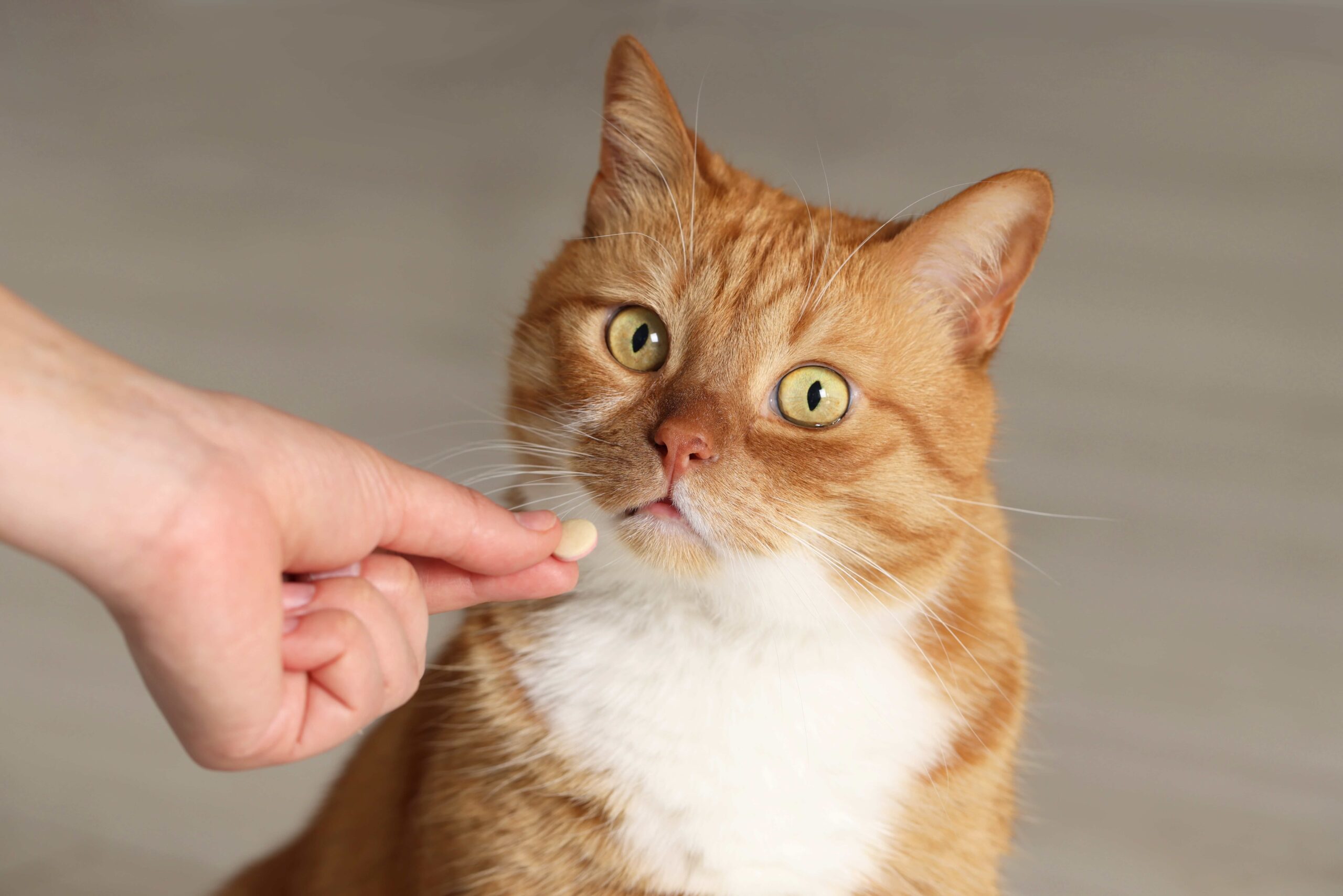
Giving a cat a tablet is something most owners of these charming yet fiercely independent creatures have to deal with sooner or later. If you have ever tried to persuade your pet to swallow medication, you know it is no easy task. Cats have very definite opinions about what they want to eat, and what they most certainly do not.
In this article we look at the different methods and techniques that can help in this tricky situation, so that both the cat and its owner can get through the process with as little stress as possible.
Why is giving a cat a tablet such a challenge?
Giving a cat a tablet is often a real challenge for the owners of these independent animals. Cats, known for their dislike of taking medication, can be remarkably stubborn. This stems from their instinctive defence against unfamiliar substances and their natural tendency to avoid stressful situations.
Every cat has its own unique personality, which means reactions to an attempt to give a tablet can vary widely. Some cats will protest loudly, using claws and teeth to defend themselves, while others may try to escape and hide somewhere hard to reach.
Owners need to be prepared for different scenarios and adapt their approach to their pet’s individual needs.
Preparing to give the tablet
Preparation is a key stage in giving a cat a tablet. It is important to choose a suitable place that is enclosed and quiet. Avoid places where the cat could hide or escape, such as open spaces or garages. The ideal choice is a room the cat does not associate with negative experiences. Before giving the tablet, it is worth creating a positive atmosphere: play with your pet for a moment or stroke it to help it relax.
Having a second person to help can prove invaluable. Working together allows one person to concentrate on holding the cat while the other gives the medication. Here are a few tips to make the process easier:
Bear in mind that a hungry cat is more likely to come to you and be more willing to cooperate. It is therefore worth giving the tablet before a meal or during feeding in the room you have chosen.
Giving the tablet directly into the mouth
Giving a cat a tablet directly into its mouth may seem daunting, but with the right technique it can be done effectively and safely. First of all, make sure both you and the cat are comfortable. Find a quiet spot with no distractions. Hold the cat gently but firmly; ideally, ask someone to help you hold the animal. Gently open the cat’s mouth, tilting its head slightly upwards. Place the tablet far back on the tongue, which will make the cat swallow it.
Watching for the swallow is essential to make sure the tablet has gone down. Once the tablet is in place, close the cat’s mouth and gently stroke its throat. This is a natural way of triggering the swallowing reflex. You may also notice a characteristic movement of the neck or the tongue flicking out, which shows the tablet has been swallowed. Keep a few important tips in mind:
With these simple steps, giving a tablet will become less stressful for both you and your pet.
Using pill givers and syringes
Giving a cat tablets can be a challenge, but there are tools that make the process much easier. One of them is a special pill giver (also called a pill popper), which looks like a syringe. It lets you place the tablet precisely at the back of the cat’s tongue, minimising the risk of it being spat out. Using a pill giver is simple and safe for both the animal and the owner. Just place the tablet in the forked tip of the device and gently insert it into the cat’s mouth.
Syringes are another handy tool, especially when a tablet can be crushed and given as a suspension. To use a syringe safely, direct the stream of liquid towards the cat’s cheek, which prevents choking. Here are a few tips on using these tools:
With these tools, giving medication becomes less stressful for both you and your pet. Always check with your vet first, however, whether a tablet can be crushed before giving it as a suspension.
Hiding the tablet in food
Giving a cat a tablet in its food is one of the most commonly used methods and can be effective, especially if your pet is a fussy eater. To improve your chances of success, choose a food with a strong taste and smell that will effectively mask the medication. This could be your cat’s favourite wet food, a tinned pâté or even a piece of meat. It is important that the tablet is well hidden and does not stand out from the rest of the food.
When using this method, make sure the cat eats the whole portion containing the hidden tablet. You can do this by offering less food than usual, so that the cat is more likely to finish the meal quickly. Here are a few tips:
These simple steps can make it much easier to give medication to our four-legged friend. Remember, though, that every cat is different and sometimes you will need to try several approaches before finding the one that works best for your pet.
Choosing flavoured tablets for cats
Flavoured tablets for cats are an excellent solution for owners who struggle to give conventional medication. These tablets are specially designed to be more appealing to animals, which makes them much easier to give. Thanks to flavourings that mimic our pets’ favourite treats, cats are less likely to spit the medication out. It is worth checking whether such products are available at veterinary pharmacies and pet shops.
When choosing flavoured tablets, keep a few pointers in mind:
Using flavoured tablets not only makes treatment easier but also minimises stress for both the cat and its owner. This allows us to focus on what matters most: the health of our four-legged friend.
What to do when all else fails
If all the standard methods of giving your cat a tablet have failed, don’t worry: there are alternatives that may prove effective. One is to crush the tablet and mix it with a small amount of water to make a suspension. This can then be given to the cat with a syringe, directing the stream towards the cheek to minimise the risk of choking. Before using this method, be sure to check with your vet that the medication can be safely crushed and dissolved.
Another option is to consult your vet to find the best solution for your pet. The vet may suggest alternative forms of the medication, such as syrups or twist-off capsules, which are easier to give. It is also worth considering the special flavoured products available on the market. Here are a few tips:
Remember that patience and understanding are key when treating your cat. Every cat is different and needs an individual approach.