Contact us Make an appointment

Why Do Dogs Lick? Causes, Meaning and How to Respond

Dogs have a natural tendency to lick all sorts of surfaces, which can leave their owners curious or even concerned. In this article we look at the various reasons why dogs lick and what the behaviour means. You will also learn how to respond if you would rather your dog did not lick you. Read on to find out more.

Why do dogs lick different surfaces?

Dogs are naturally inclined to lick various surfaces such as floors, carpets and their beds. There are several reasons for this behaviour. First, licking the floor or carpet may simply be down to leftover food or the smell of a chew the dog was eating earlier. It is a natural instinct: the animal is gathering information about its surroundings through smell and taste.

However, obsessive licking of walls and other surfaces can be a sign of behavioural or health problems. Dogs may lick walls and other surfaces because of indigestion, heartburn or a sore throat. If you notice that your dog licks surfaces frequently and persistently, it is worth consulting a vet to rule out any underlying health issues. The behaviour can also be the result of stress or boredom. In that case it is a good idea to consult a behaviourist, who can help identify the cause and suggest suitable solutions.

Why do dogs lick their paws?

Occasional paw licking is simply a dog’s natural way of cleaning itself. Dogs lick their paws to remove dirt or bits of grass picked up on a walk. This is nothing to worry about, as it helps the dog stay clean.

Obsessive paw licking, on the other hand, can be a sign of behavioural or health problems. Dogs may lick their paws excessively because of stress or boredom. The behaviour can also stem from obsessive-compulsive disorder brought on by excessive stress.

What does it mean when dogs lick each other?

Licking between dogs is often an expression of affection and friendliness. Dogs show their feelings by licking one another, which strengthens their bond and helps them make up after a conflict. It is a natural form of communication between them.

It is important, though, to be able to tell friendly licking from behaviour that may be a form of bullying. When watching dogs interact, pay attention to how the dog being licked reacts. If it shows signs of stress, such as flattened ears, a tucked tail or bared teeth, the contact may not be pleasant for it. In that case, interrupt the licking and separate the dogs to avoid a more serious conflict.

Why does a dog lick surfaces around the house?

There are several possible reasons why a dog might lick surfaces around the house, such as walls, floors and carpets. One of them is indigestion, heartburn or a sore throat. Licking these surfaces may be the dog’s way of soothing an upset stomach or an irritated throat.

Stress is another factor behind persistent licking of the carpet or bedding. Dogs may lick these surfaces as a way of coping with difficult emotions caused by stress. If your dog obsessively licks the carpet or bedding, it is worth consulting a behaviourist, who can help pinpoint the source of the stress and suggest ways to help your dog deal with it.

What does it mean when a dog licks its owner?

A dog licking its owner can have various meanings and causes. Often it is a sign of great affection for the person looking after it. A dog may lick its owner’s face, hands or other parts of the body to express love and attachment.

For some dogs, licking is also a way of getting attention. They may do it when greeting you after a long separation or when they want you to notice them. For them, licking is a form of communication and a way of expressing emotion.

Not every owner enjoys being licked, however. If you would rather your dog did not lick you, consistently interrupt the behaviour by moving your face and hands away. Offer an alternative form of contact instead, such as calm stroking or a game of tug.

How to respond if you don’t want your dog to lick you

Consistently interrupting the licking is key if you do not want your dog to lick you. Be firm and consistent in how you respond. As soon as the dog starts licking, break off contact and move your face and hands away. You can also use a cue such as “no” or “stop” to make it clear that you do not accept the behaviour. It is important not to punish the dog for licking, only to stop the unwanted contact.

Alternative ways of interacting with your dog can help replace the licking. Instead of letting the dog lick you, offer forms of contact you find more acceptable. For instance, focus on calmly stroking the dog or playing a game of tug. This gives the dog a way to express its affection and love that is more comfortable for you.

Safety and hygiene also matter when it comes to licking. Although being licked by a dog is not a danger to the average healthy person, bear in mind that contact with a dog’s saliva can transmit bacteria and parasites. Young children and people with weakened immune systems in particular should avoid contact with dog saliva. Do not let a dog lick a person’s wounds either, as this can lead to infection. If both you and your dog are healthy, however, you can allow licking in a controlled, safe way.

Can Dogs Eat Nuts? Nutritional Value and Potential Risks

Nuts can be a tasty and nutritious snack for dogs, but not all of them are safe for your dog’s health. In this article we look at which nuts are suitable for dogs, what nutrients they provide and what risks come with certain types of nuts.

Can dogs eat nuts? And if so, which ones? Peanuts, almonds, pistachios

Can dogs eat nuts? The answer is yes: they can make a great, healthy snack, provided you choose the right type of nut, the right amount and the right way of serving them.

Dogs, like people, enjoy a variety of snacks, but not all nuts are safe for them. Below are some popular types of nuts that are safe for dogs, as long as they are given in moderation and properly prepared.

Peanuts

Peanuts are among the most popular nuts you can give to dogs. They are rich in protein, healthy fats and vitamins B and E. Just remember to serve them without salt or other additives that could harm your dog. Peanuts can also be an allergen, so introduce them gradually and watch how your dog reacts.

Almonds

Almonds are another type of nut that dogs can safely eat, but only in small quantities. They are rich in vitamins E and B2, magnesium, manganese and fibre. Because they are hard, almonds should be finely chopped to avoid the risk of choking. It is also worth noting that some dogs find almonds hard to digest, so keep an eye on your dog’s digestion after it has eaten them.

Pistachios

Pistachios are a healthy snack for dogs, as they contain fibre, protein and healthy fats. As with other nuts, avoid salted pistachios or those with added flavourings. Pistachios should also be served without the shell, which can be a choking hazard or cause digestive problems.

Walnuts as a healthy snack for dogs

Walnuts are another type of nut that can make a healthy snack for your dog. They are rich in B vitamins, folic acid, manganese, copper, zinc and dietary fibre. However, it is important to give your dog only fresh walnuts.

Spoiled nuts can harbour moulds and fungi that produce toxins harmful to dogs. That is why you should check walnuts for freshness before offering them. If the nuts are spoiled or smell suspicious, it is better not to give them to your dog. Bear in mind, too, that walnuts are high in calories, so keep portions modest.

Can dogs eat hazelnuts?

Yes, dogs can eat hazelnuts. Fresh, shelled hazelnuts can also be given to your pet from time to time. Like walnuts, hazelnuts contain plenty of valuable nutrients: vitamins B1, B6 and E, folic acid, manganese, zinc and magnesium. But when feeding hazelnuts to your dog, moderation is key.

Hazelnuts are high in calories, and too many can lead to obesity in dogs. So give them in moderate amounts as a treat or a training reward. The nuts must also be fresh and shelled. The hard shells of hazelnuts can damage a dog’s gums or even injure the digestive tract if swallowed. Make sure the nuts are properly prepared before giving them to your dog.

Can dogs eat Brazil nuts or cashews?

Besides almonds, pistachios, peanuts, walnuts and hazelnuts, there are other types of nuts that are safe for dogs. These include Brazil nuts and cashews. Both are rich in nutrients and can serve as a tasty treat or add variety to your four-legged friend’s training rewards.

Type of nutNutritional value
Brazil nutA rich source of B vitamins, vitamin E, magnesium, phosphorus and selenium.
CashewHigh in plant protein, vitamin E, thiamine, magnesium and zinc.

As with other safe nuts, it is important to give Brazil nuts and cashews to your dog in moderation. They are high in calories, so serve them in modest amounts suited to your dog’s nutritional needs. You can offer them as a treat or to vary training rewards, giving your dog a range of flavours and textures in its diet.

Peanut butter for dogs: healthy treat or potential hazard?

Nut butter made from nuts that are safe for dogs can be a healthy and tasty treat for your four-legged friend. However, it is important to read the product label carefully and make sure it contains no additives that are harmful to dogs.

The best choice is a natural nut butter labelled “bio” or “organic”, made without any artificial additives. Also check the sugar content, as too much sugar can harm your dog’s health. You can also make nut butter for your dog at home by blending fresh peanuts, almonds or cashews.

Why macadamia nuts are harmful to dogs

Macadamia nuts are among the most harmful nuts for dogs. They contain a substance whose exact mechanism has not yet been fully identified, but it appears to be very potent. Studies show that even a small amount of macadamia nuts, as little as 0.7 g per kilogram of body weight, is enough to cause poisoning.

The first signs of macadamia poisoning in dogs can appear within 12 hours of ingestion. They may include pale mucous membranes, weakness in the hind legs, vomiting, tremors, abdominal pain and hypothermia. These problems can persist for up to 48 hours and require veterinary attention. Similar signs can occur in dogs after eating black walnuts, a species related to the common walnut.

Avoid pecans too

Pecans are very high in fat, which can lead to pancreatitis in dogs, so dogs should not eat them. They may also contain toxic substances such as juglone, which is harmful to dogs. Eating pecans can cause vomiting, diarrhoea, abdominal pain and even seizures.

General recommendations

When introducing nuts into your dog’s diet, moderation and caution are essential. Nuts should be only a small addition to the diet, never a staple. Too many nuts can lead to digestive problems such as diarrhoea, vomiting or constipation.

Dogs can also be allergic to certain nuts, which shows up as itching, a rash, swelling or even difficulty breathing. If you notice any of these signs, contact your vet immediately.

Remember, too, that some nuts, such as macadamia nuts and pecans, are highly toxic to dogs and can cause serious health problems, including weakness, vomiting, muscle tremors and a raised body temperature. That is why it is important to check carefully which nuts are safe before offering them.

Adding nuts to your dog’s diet can be a healthy and tasty way to add variety, as long as you follow the rules above and keep an eye on how your pet reacts.

How Can You Tell Your Cat Is Happy? Giving Your Cat a Life That Meets Its Natural Needs

Having a cat is a pleasure, but it is also a responsibility. To keep our pet happy and healthy we need to understand its natural needs and meet them. In this article we look at different aspects of cat care: play, mental stimulation, physical closeness and scent marking. We will try to answer the question: how can you tell your cat is happy? And how do you get it there? Find out how to create the ideal living conditions for your cat and how to build a strong emotional bond.

How can you tell a cat is happy from its purring?

Purring is one of the most recognisable ways a cat expresses joy and contentment. It is worth remembering, though, that cats purr for different reasons, and purring does not always mean the cat is feeling good. So it helps to know the different kinds of purring and learn to tell a positive purr from a negative one. That is not difficult: purring linked to distress or pain sounds quite distinctive, and almost anyone can pick it out intuitively.

The reason we all hope for is simple happiness. When a cat feels happy, it may start purring in the presence of its owner or during play. This is positive purring, and it shows that the cat feels safe and loves its owner. Another cause is relaxation and comfort. Cats often purr while dozing or resting, which reflects their contentment and wellbeing.

What does it mean when a cat rubs against us?

Cats have their own unique ways of spreading their scent and building an emotional bond with their owner. One of these behaviours is rubbing against our legs, body or face. This is a form of scent marking, and it carries several meanings for cats.

Scent marking serves several important functions for cats. First, by rubbing against us, cats leave their pheromones on our skin. Pheromones are chemical substances cats use to communicate with one another. So when a cat rubs against us, it leaves scent marks that tell other cats this is its territory and that it is safe here.

Rubbing against us is also a way of expressing trust and acceptance. Cats choose us as the people they trust and want to cuddle up to. It is their way of building an emotional bond with us. When we accept and tolerate a cat’s scent marking, we show it that we accept it and that it matters to us.

What other behaviour shows that a cat is happy?

There are several behaviours that can signal a cat’s happiness and wellbeing. One of them is a raised tail. If a cat holds its tail high and moves it gently, it is a sign that it feels confident and content. If the tip of the tail is slightly curved, it means the cat is especially cheerful and enthusiastic.

Another behaviour that can indicate a contented cat is bird-watching. Cats love watching birds flying about outside the window. For them it is a fascinating spectacle and, at the same time, a natural outlet for their predatory instinct. If your cat spends a lot of time watching birds and perhaps even reacts to their movements, you can be sure it feels at home in its surroundings.

Bear in mind that every cat has its own preferences when it comes to entertainment. Some cats prefer active games such as chasing a wand toy or running after a ball. Others value mental challenges more, such as puzzles or treat-dispensing toys. It is important to match the type of toy to your cat’s preferences and to offer a variety of entertainment. This lets the cat express its natural instincts and makes it more content.

How do you give a cat a life that meets its natural needs?

It is important to give your cat a life in line with its natural needs. One of the key elements is proper engagement in play. Cats are predators and love to hunt, so it is important to provide toys and activities that stimulate their hunting instincts. You can use wand toys, balls or other interactive toys that let the cat run, jump and hunt. This not only entertains it but also helps burn off excess energy.

Another important matter is a proper place to rest. Cats need their own space where they can relax and feel safe. It is worth having several secluded, draught-free sleeping spots for them. These could be beds, cat houses or even special wall-mounted shelves. The resting place should also be clean and comfortable for the cat.

How can play stimulate a cat’s mind?

Cats are not just animals that love to run and hunt; they are also highly intelligent. That is why it is important to engage them in mental games that get their grey cells working. Pet shops offer plenty of special “puzzle” toys for cats. These toys require the cat to solve a problem or use its senses, so it has to concentrate and think.

One popular type of intelligence toy is the treat dispenser, from which the cat has to extract a treat hidden in hard-to-reach places. Another type is the puzzle board, where the cat has to slide pieces or open compartments to reach the reward. There are also interactive snuffle mats where the cat has to search for food hidden in different pockets.

Why is physical closeness important for a cat’s happiness?

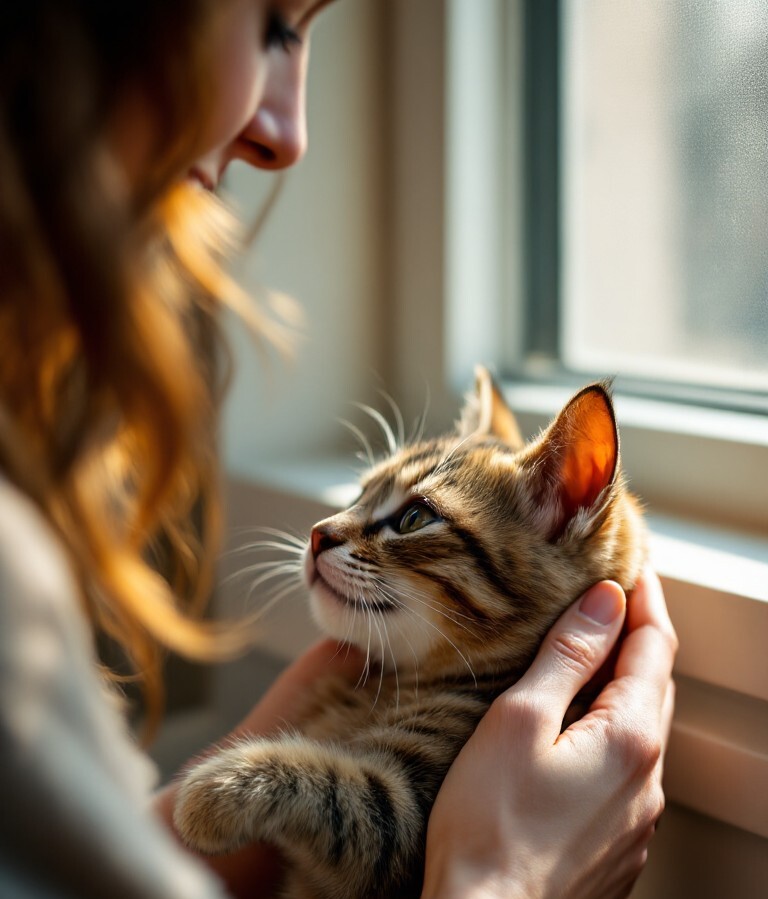
Physical closeness is extremely important for a cat’s happiness. Cats are animals that need contact and closeness with people. Snuggling up to its owner is one of the signs that a cat is feeling good. When a cat jumps onto the sofa or into bed and cuddles up to us, it shows that it feels safe and loves us. It is an expression of trust and of the emotional bond between us.

Cats have different ways of showing they need physical closeness. It might be nuzzling, pressing against our legs, rubbing against our body or even sitting on the keyboard while we work at the computer. These are signals that the cat wants to be close to us and enjoys the time we spend together.

Summary

Owning a cat is a responsibility that includes ensuring its happiness and wellbeing by meeting its natural needs. For a cat to be happy, pay attention to its behaviour: positive purring, a raised tail, rubbing against its owner. It is also important to provide adequate stimulation through play, mental challenges and physical closeness. Cats need a proper resting place, interactive toys and contact with people in order to feel safe and loved, in a word: happy.