
Contact us Make an appointment

Do cats really not show love, or do we simply misread their signals?

Cats have fascinated people for centuries with their mysterious nature and independent character. That often raises a question: are these animals actually capable of showing love and attachment to the people who care for them? The problem, though, is not that cats lack feelings — they simply communicate differently, and we do not always read their emotional signals correctly.

How cats bond with their owners

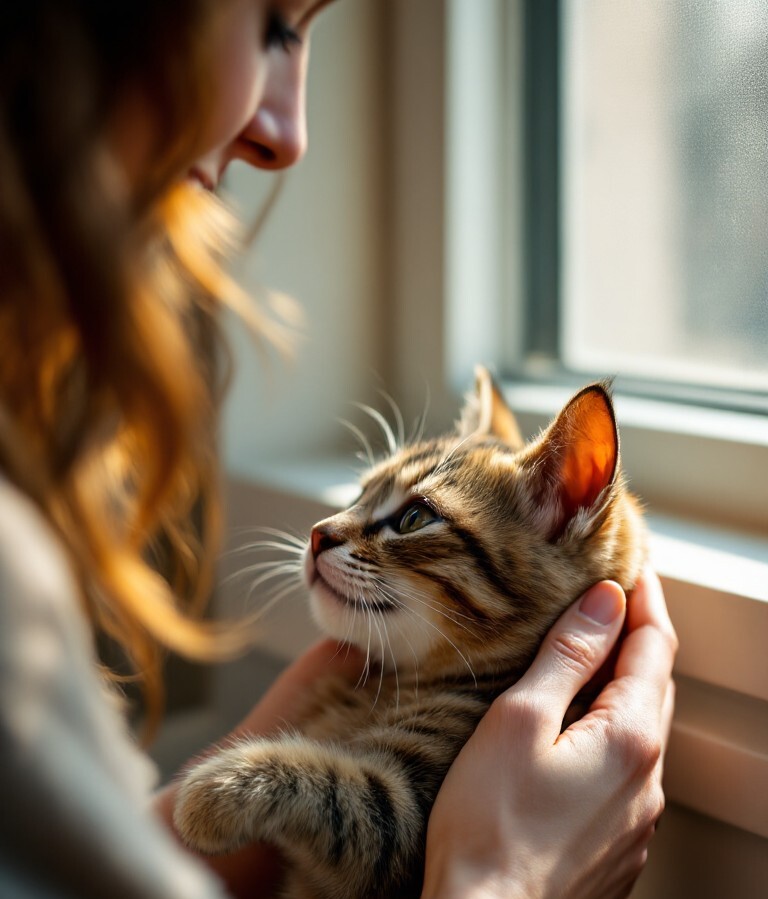
Cats are certainly capable of becoming attached to their owners, though they do it in a subtler way than dogs, whose displays of emotional bonding are more familiar to us. Research shows that cats can form strong emotional bonds with people and feel genuine attachment to their carers, expressed in all sorts of ways. A cat shows its feelings through behaviour: wanting to be near its owner, purring in their presence, rubbing against their legs. Cats also tend to follow their owners around the house and try to take part in everyday activities, which is further evidence of trust and attachment. A balanced relationship with a cat calls for patience and understanding, but the strong bond that can be built proves how capable these animals are of forming deep emotional ties with people.

Why cats are more reserved than other animals, such as dogs

Cats are often seen as more reserved and independent than dogs, and the explanation lies in their evolutionary heritage and natural instincts. Unlike dogs, which were domesticated to work alongside people at various tasks such as hunting, herding and guarding, cats retained their wild instincts for a long time. As predators they rely on self-sufficiency and free exploration, which makes wariness of unfamiliar situations and people entirely natural for them. Cats are also more sensitive to changes in their surroundings and to external stimuli, so they often need more time to adjust to new conditions. This is why cats can seem more withdrawn, especially next to dogs, who are readier to show emotion and seek out human closeness.

Signs that a cat is attached to its owner

Cats express attachment to their owners in many subtle but telling ways. One of the best-known signals is purring, which usually accompanies moments when a cat feels safe and relaxed in its owner’s company. Another sign is physical gestures such as rubbing against your legs, which is how cats mark territory and show closeness at the same time. A cat may also bring “presents” in the form of toys it has “hunted”, its own way of sharing and showing affection. It is worth paying attention to how a cat behaves during interaction too: attached cats take an interest in their people, follow them around the house and try to be part of everyday activities. Another sign is a cat closing its eyes in its owner’s presence, which indicates trust, as does lying on its back with the belly exposed — in cat language, a statement that it feels safe. Cats may also bounce about or flick the tip of the tail when they are near their owners, which likewise speaks of a contented cat and of attachment. All this behaviour shows that cats can form strong emotional bonds with people, even if the way they show it differs from the more expansive and open gestures of dogs.

How to respond to a cat’s signals and build a stronger bond

To build a stronger bond with a cat, the key is to understand its signals and respond to them appropriately. Start with purring, which usually means contentment and comfort: spend time beside your cat and stroke it gently in the places it likes best, such as the head or under the chin, which will reinforce its sense of security. Watch your own body language too; an open, calm posture and no sudden movements will help the cat feel less threatened. When your cat rubs against you, return the gesture with a gentle stroke along its side or tail, doing so naturally and with respect for its boundaries. When a cat brings you toys or tries to make contact, joining in with a wand toy or a ball will strengthen the relationship while exercising its mind and hunting instincts. The “slow blink” also works — closing your eyes and opening them again unhurriedly while looking at the cat is read as a sign of trust and can deepen the bond. It is important to adapt your interactions to each cat’s individual needs and preferences, giving it space when it needs space and offering closeness and attention when it seeks contact itself. By respecting its signals and responding to them positively, you can build a lasting, trusting relationship with your pet.

Can cats easily lose trust in their owner?

Cats, like other animals, are capable of forming deep bonds with their owners, but their trust is fragile and can be broken easily. A cat may lose trust in its carer for all sorts of reasons: sudden loud noises, aggressive or unpredictable behaviour on the owner’s part, or bad experiences such as pain caused by rough handling or unpleasant visits to the vet. Even situations that seem harmless at first glance — being picked up the wrong way, or changes to familiar surroundings — can affect how a cat sees its owner, particularly if the animal feels threatened or upset. Once a cat has lost trust, it may become more withdrawn, avoid contact and even show aggressive behaviour that was never there before.

Do spaying and neutering really make animals live longer?

Spaying and neutering pets are subjects that have stirred strong feelings and lively debate for years among dog and cat owners, veterinarians and animal lovers alike. Many people are convinced that these procedures do a great deal of good, both for the animals themselves and for the community they live in. Shifting approaches to managing pet populations, together with the growing number of homeless animals, make spaying and neutering more relevant than ever. In this article we look at the benefits these procedures bring and consider why they are a key part of responsible pet ownership. 

Why spaying and neutering pets matter

Spaying and neutering play a key role in managing pet populations, which matters both for animal health and for the wellbeing of the wider community. One of the main reasons these procedures are important is that they prevent uncontrolled breeding, which produces large numbers of homeless animals that end up in shelters or on the street. Spaying and neutering also help reduce the risk of many diseases, among them tumours of the reproductive organs, and they cut down on unwanted behaviour such as aggression or running off in search of a mate. The procedures improve animals’ quality of life by removing the stress that comes with the reproductive cycle and keeping them out of dangerous situations such as fights with other animals. In the longer term, spaying and neutering not only bring health benefits but also support a sustainable animal population, which is good for society as a whole. Owners are therefore encouraged to make informed decisions about these procedures, which have a positive effect on their pets’ lives and on the world around them.

Spaying and mammary tumours: evidence for a longer life

One of the strongest arguments for spaying female dogs is its marked effect on the risk of mammary tumours, and hence on how long these animals live. Studies show that spaying a young bitch before her first season reduces the risk of mammary tumours as much as 200 times compared with bitches that are not spayed. Where the operation is carried out between the first and second season, the risk falls 13-fold. Given that mammary cancer is the most common form of tumour in unspayed bitches, the benefits of early spaying are considerable indeed. A lower cancer risk not only improves quality of life but also lengthens it, which is strong evidence that spaying is good for animals’ health and welfare.

Preventing uterine disease

Spaying pets, and female dogs in particular, is crucial in preventing serious diseases of the reproductive system such as pyometra and uterine tumours. Pyometra is a dangerous infection that often requires costly treatment and frequently ends tragically, with the loss of the animal. It is a common problem in unspayed bitches and usually appears after a season. Uterine tumours are relatively rare, but they too carry considerable health risks and expensive treatment. During spaying the uterus is removed entirely, which eliminates the risk of these dangerous conditions.

How neutering affects the quality and length  of a dog’s life

  • One of the key benefits of neutering is that it prevents most prostate disorders in male dogs. In older, unneutered dogs the prostate often becomes enlarged, infected or affected by other serious conditions such as acute or chronic prostatitis, tumours of the perianal glands or prostatic abscesses. Studies show that most of these disorders are far less common in neutered dogs.
  • Many unneutered males display aggressive behaviour, which can take various forms including dominance aggression, fear aggression and aggression towards other males. Neutering is a significant part of treating and preventing aggression: around 50% to 75% of dogs neutered because of aggression problems show an improvement in behaviour, and in some cases the aggression disappears altogether. Good upbringing and training are equally important, but neutering is a meaningful step towards a calmer and safer life for the dog.
  • Removing the testicles during neutering eliminates the risk of testicular cancer. Neutering also helps prevent and treat a range of conditions, both infectious and non-infectious. Unneutered dogs, for example, may develop feminisation syndrome linked to hormonal disturbance, which does not occur in animals neutered at a young age. Neutering also reduces the risk of perineal hernia and removes problems caused by sex hormones. In some breeds, moreover, it can help prevent or treat skin conditions.

Spaying, neutering and the fight against homelessness

Spaying and neutering pets play a key role in reducing homelessness and straying, which are serious problems in many communities. The main reason the numbers of homeless dogs and cats keep rising is uncontrolled breeding, which produces a surplus of puppies and kittens that later often end up on the street or in a shelter. Owners who decide against spaying or neutering expose their pets to the risk of running away, especially during oestrus or a season, when animals go looking for a mate. Situations like these lead not only to unplanned litters but also to the risk of road accidents, disease or cruelty. By having pets spayed and neutered, the number of homeless animals can be reduced, helping to create a safer and healthier environment for animals and people alike.

Don’t stroke me! Why do some cats hate being touched?

Cats have fascinated people for centuries with their mysterious nature and independent streak. Yet every cat owner knows that some of these animals respond to an attempted stroke with reluctance, or even aggression. What lies behind that? Here are a few reasons why certain cats cannot bear being touched.

Individual and breed preferences

Cats have distinctive personalities, and those personalities usually decide how they feel about physical contact. Both genetics and past experience shape their behaviour and their attitude to being stroked. Breeds such as the Ragdoll, Maine Coon, Persian and British Shorthair are often considered more sociable and friendly, happily accepting touch and actively seeking out their owners’ company. Ragdolls, for instance, are known for their gentle nature and affection towards people. Maine Coons, too, are usually open and friendly, though they can show a certain independence depending on their mood. Breeds like the Scottish Fold, Bengal, Russian Blue and Siamese, on the other hand, may be more self-contained and choosier about physical interaction. Bengals, for example, are energetic explorers who tend to prefer active play to passive cuddling. It is therefore important for owners to watch the signals their cat sends — the position of the ears and tail, the look in the eyes — to work out when the animal is ready for closeness. Understanding and respecting each cat’s individual preferences is the key to a strong relationship built on trust and comfort.

Past trauma

Cats that have suffered mistreatment or been through difficult situations in the past often become sensitive to touch and to human closeness. Such experiences change the way they see human hands, associating them with danger, which leads to fear or an aggressive reaction whenever someone tries to make physical contact. Many of these cats cannot trust their owners straight away, so a great deal of patience and understanding is needed. The essential thing is to introduce physical contact slowly and gradually, starting with gentle, undemanding steps such as simply sitting quietly near the animal or offering treats so that contact comes to be associated with something pleasant. In time, and with the right approach, a cat can be helped to overcome its fear and begin to build real trust, so that it can finally enjoy the affection and closeness people have to offer. 

Skin hypersensitivity

Sometimes a cat’s dislike of being touched is the result of a hidden health problem, such as hypersensitive skin. Conditions of this kind can make even the gentlest stroking painful and unpleasant. Signs of skin hypersensitivity may include scratching, rubbing the body against objects and even avoiding people altogether. If an animal reacts badly to touch or behaves in a worrying way — grinding its teeth or making distressed noises — those signals should not be ignored. A consultation with a veterinarian may prove essential, as a specialist can diagnose possible skin conditions or other health problems such as allergies, infections or dermatological disease. Early diagnosis and appropriate treatment can improve a cat’s comfort considerably and help it cope far better at home. 

Too much stimulation

Cats are remarkably sensitive to what goes on around them, so their reactions to different situations can be intense and varied. When a cat is under considerable stress or is tired, its ability to tolerate extra stimulation — touch or loud noises — drops sharply. At such moments an overload of stimuli can make the animal withdraw, turn jumpy or even become aggressive. Owners should watch for signs of sensory overload: hiding away, purring in an unusual way, scratching or holding the body in a tense posture. When that happens, it is important to give the cat plenty of space and time to rest, so that it can recover somewhere quiet and calm. Setting up a relaxation zone where the cat can hide and feel safe makes a real difference in managing its stress.

Don’t touch me! — the signals cats send us

  1. Body language: pay attention to the cat’s posture. If the tail is up and the body relaxed, it may be ready for contact. A lowered or bristling tail, and a hunched posture, are signs that the cat does not feel at ease.
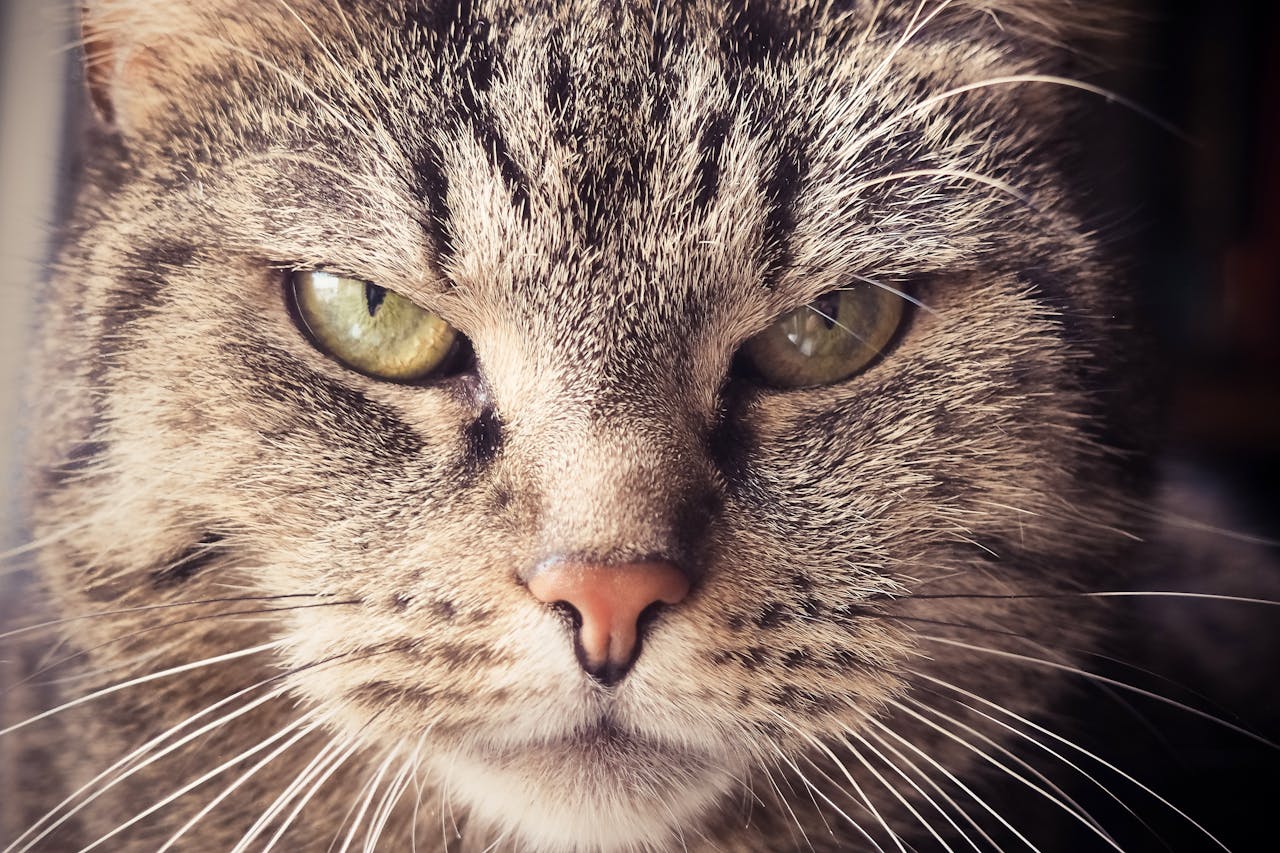
  2. Ears and eyes: the ears say a great deal. Ears turned back can indicate irritation or unease. Wide-open eyes, or a hard stare in the direction of a person, may likewise signal bewilderment or frustration.
  3. Sounds: vocal behaviour such as hissing, growling or a low grumble can be a clear sign that a cat is unhappy about being touched. Noises like these should be taken seriously.
  4. Avoiding contact: if a cat pulls away, moves off in the opposite direction or plainly dodges the hand stroking it, that is a strong signal that it would rather be left alone.
  5. Scratching and biting: if a cat starts to scratch or bite when you try to stroke it, it feels threatened and wants the contact to stop.

First steps in getting a cat used to touch

Getting a cat used to being touched takes time, patience and sensitivity on the owner’s part. The crucial first step is to create a calm, safe atmosphere in which the cat feels comfortable. It is worth starting by letting the cat get used to your presence gradually — simply spending time in the same room without forcing any contact. Watch the cat’s signals; if it shows interest, you can slowly introduce gentle touches, beginning with the areas it usually tolerates, such as the head or under the chin. Positive reinforcement helps: offer a treat or a favourite toy when the cat responds well to being touched, so it comes to associate these moments with something enjoyable. Avoid sudden movements and loud noises, which can cause stress. The key to success is a patient approach and respect for the cat’s boundaries; over time this allows it to build trust and open up to human closeness.