

-

Parasitic diseases in rabbits: the commonest threats and how to prevent them
Coccidiosis, encephalitozoonosis, ear mange and cheyletiellosis are the parasitic diseases pet rabbits meet most often, and they can go unnoticed for a long time. We explain how they are diagnosed in the laboratory, how they are treated, and which hygiene, quarantine and feeding rules keep infection at bay.
-

How to protect your dog’s paws in winter
Frost, ice and road salt leave a dog's pads irritated, cracked and sometimes frostbitten every winter. We explain how to pick a route and a protective wax before the walk, how to rinse and dry the paws properly once you are home, and which signs mean it is time to call the veterinary clinic.
-

Horner’s syndrome in dogs and cats: signs, causes, diagnosis and treatment
A drooping eyelid, a smaller pupil and a visible third eyelid on one side add up to Horner's syndrome. It is not painful in itself and does not harm sight, but it often signals another, more serious condition underneath. We explain the causes, the diagnostic steps, the pharmacological tests and the treatment options.
What Is Cardiomyopathy in Cats?
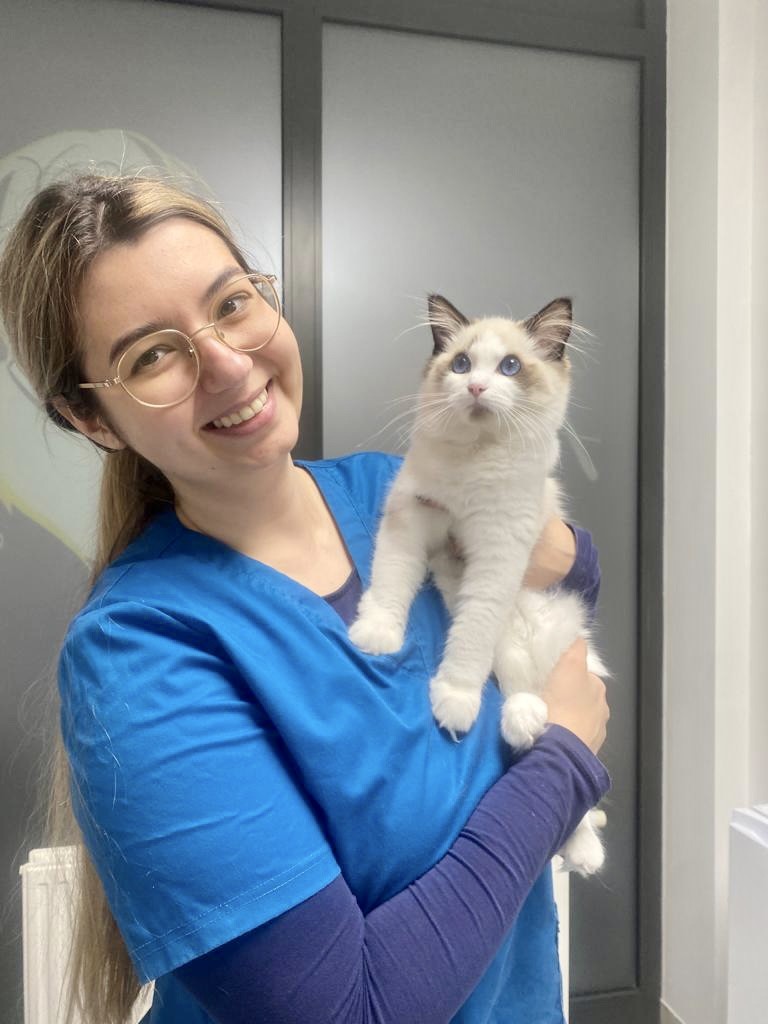
What is cardiomyopathy in cats?
Cardiomyopathy is a heart disease in which irreversible changes take place in the heart muscle. The muscle cells become disorganised and lose their tone, which impairs their contractility and elasticity. Their shape and size also change. The heart becomes weakened and struggles to pump blood. The disease can affect both pedigree cats and ordinary moggies, although certain breeds are predisposed to it.
What is hypertrophic cardiomyopathy?
The disease is also known by the abbreviation HCM, and it is the most common of all the types of cardiomyopathy. It involves the wall of the left ventricle thickening inwards. The result is a reduction in the volume of the ventricle, referred to in veterinary medicine as a narrowing of the ventricular lumen. Enlargement of the left atrium can also be a cause.
What is dilated cardiomyopathy?
Dilated cardiomyopathy (DCM) involves weakening and enlargement of the heart muscle. All the atria and ventricles of the heart become dilated. This makes it very hard for the heart to work and to pump blood. The disease is far more common in dogs than in cats.
How is cardiomyopathy diagnosed?
Cardiomyopathy in a cat can be diagnosed with an echocardiogram. The vet assesses the outline of the heart and its ventricles and atria. The lungs are also assessed, both by auscultation and visually. To confirm hypertrophic cardiomyopathy beyond doubt, blood tests can be run whose parameters indicate the risk of the disease developing. If you own a cat of a predisposed breed, the most important thing is routine veterinary check-ups and screening.
What are the symptoms of heart disease in cats?
The most common heart-related signs include:
How is cardiomyopathy in cats treated?
Treating cardiomyopathy in cats involves giving medication that improves the strength of the heart muscle’s contractions. It has to be remembered that the disease cannot be cured; medication can only slow its progression, which is why early detection is key.
Which breeds are predisposed to cardiomyopathy?
Interestingly, in Maine Coon and Ragdoll cats the disease is genetic, meaning that every individual carrying the gene mutation is affected to some degree. Cats carrying this gene must not be bred, but even cats that do not carry it can produce offspring in which the gene is present. Moggies can also suffer from the condition; they are by no means exempt. Other breeds at risk are:
Summary:
Routine screening is the foundation for starting treatment early and, in turn, extending your pet’s life in comfort. If your cat comes from a breeder, check the parents’ test results; unfortunately this does not give a cast-iron guarantee that the disease will not occur, but it does make it less likely.
Mixed-breed cats, or moggies, can also be affected by cardiomyopathy, so regular veterinary visits are a cornerstone of caring for any animal.