

-

Parasitic diseases in rabbits: the commonest threats and how to prevent them
Coccidiosis, encephalitozoonosis, ear mange and cheyletiellosis are the parasitic diseases pet rabbits meet most often, and they can go unnoticed for a long time. We explain how they are diagnosed in the laboratory, how they are treated, and which hygiene, quarantine and feeding rules keep infection at bay.
-

How to protect your dog’s paws in winter
Frost, ice and road salt leave a dog's pads irritated, cracked and sometimes frostbitten every winter. We explain how to pick a route and a protective wax before the walk, how to rinse and dry the paws properly once you are home, and which signs mean it is time to call the veterinary clinic.
-

Horner’s syndrome in dogs and cats: signs, causes, diagnosis and treatment
A drooping eyelid, a smaller pupil and a visible third eyelid on one side add up to Horner's syndrome. It is not painful in itself and does not harm sight, but it often signals another, more serious condition underneath. We explain the causes, the diagnostic steps, the pharmacological tests and the treatment options.
Cane Corso breed profile: a guardian with a big heart
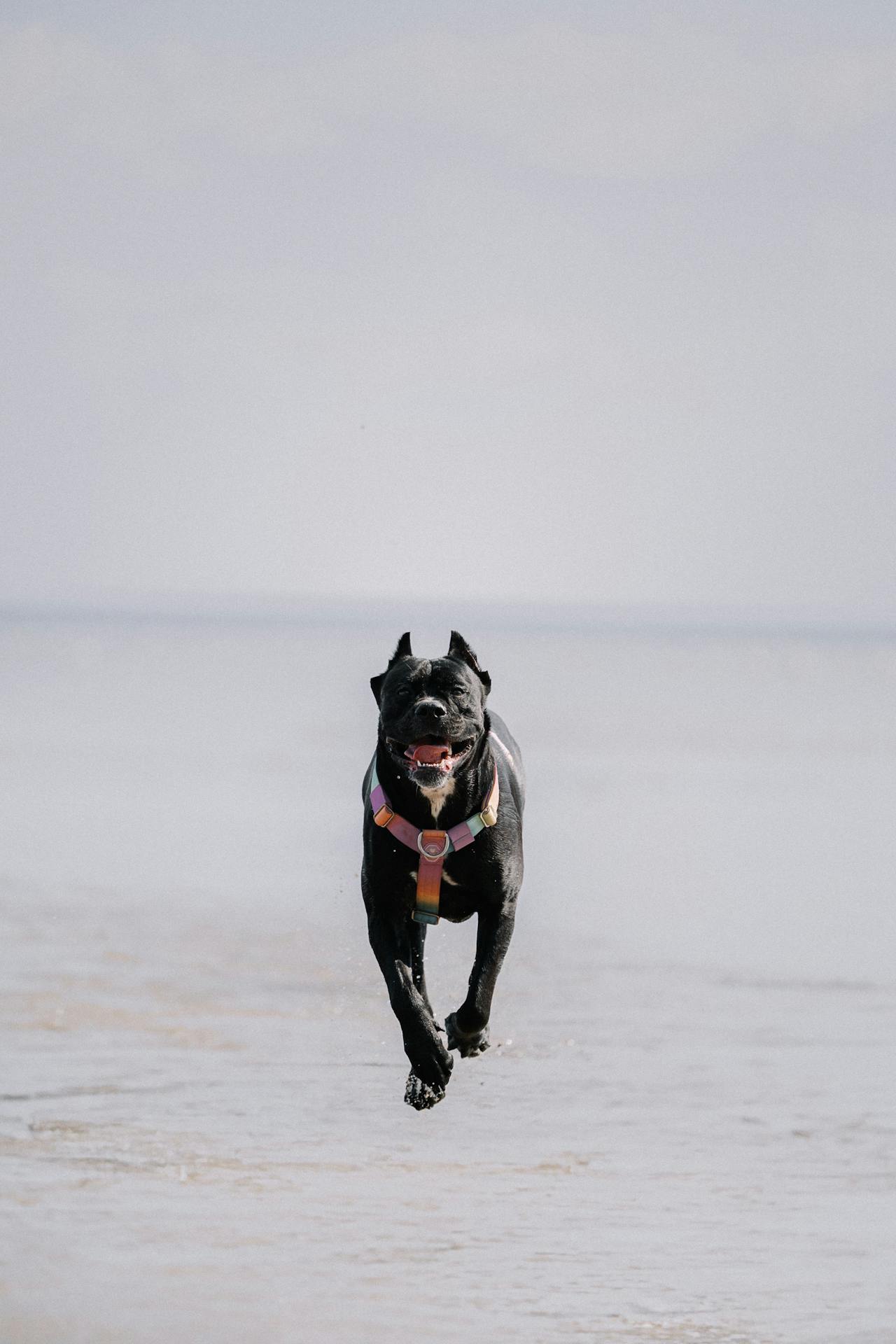
The Cane Corso is a breed that commands both respect and admiration. Powerful and muscular, with an imposing build and an intelligent gaze, this Italian dog has a long and rich history. At first glance he may look forbidding, but in truth the Cane Corso is a dog with an enormous heart, devoted to his family and even-tempered by nature.
Cane Corso: history and origins
The Cane Corso descends from the ancient Roman molossers, dogs the Roman army used in war and for hunting. After the fall of the Roman Empire the breed survived in southern Italy, where it became an all-round farm dog. The Cane Corso guarded homesteads, watched over cattle and even helped with wild boar hunts. By the middle of the twentieth century the breed was close to extinction, but the efforts of Italian enthusiasts saved and rebuilt it. Officially recognised by the FCI (Fédération Cynologique Internationale) in 1996, the Cane Corso went on to win popularity around the world.
Cane Corso: character and temperament
Cane Corsos have a strong, steady character. They are highly intelligent, self-assured and devoted to their family. Their loyalty to their owner knows no bounds, which makes them excellent guard dogs. They are not aggressive by nature, but their protective instinct is powerful. They size up a situation quickly and will step in to defend those close to them if they judge it necessary.
Despite appearances, Cane Corsos are gentle and affectionate with their household, children included. They do, however, need early socialisation and consistent training. A dog of this breed who meets other dogs and people from puppyhood will grow into a calm, well-balanced companion.
Training and grooming
The Cane Corso is not a dog for everyone. He needs an experienced owner who can give him plenty of physical exercise and consistent training. Dogs of this breed need long walks every day, along with mental stimulation through play and training sessions. Neglect this and you invite frustration and behavioural problems.
Grooming a Cane Corso is relatively straightforward. The short, dense coat does not need frequent brushing — once a week is enough to remove dead hair. What does matter is checking the ears and eyes regularly and keeping the teeth clean.
Health and predisposition to disease
The Cane Corso is generally a healthy, hardy breed, but like many large dogs it is predisposed to several inherited conditions. One of the most common is hip and elbow dysplasia, a developmental defect that can cause pain and difficulty moving. This is why puppies should only ever be bought from responsible breeders who x-ray their breeding stock. Other health problems the Cane Corso is prone to include gastric torsion (a particularly dangerous condition in large breeds that calls for immediate veterinary treatment) and eye problems such as entropion and ectropion (eyelid defects). Regular check-ups with a veterinarian and a balanced diet can help prevent many of these problems.