

-

Parasitic diseases in rabbits: the commonest threats and how to prevent them
Coccidiosis, encephalitozoonosis, ear mange and cheyletiellosis are the parasitic diseases pet rabbits meet most often, and they can go unnoticed for a long time. We explain how they are diagnosed in the laboratory, how they are treated, and which hygiene, quarantine and feeding rules keep infection at bay.
-

How to protect your dog’s paws in winter
Frost, ice and road salt leave a dog's pads irritated, cracked and sometimes frostbitten every winter. We explain how to pick a route and a protective wax before the walk, how to rinse and dry the paws properly once you are home, and which signs mean it is time to call the veterinary clinic.
-
Horner’s syndrome in dogs and cats: signs, causes, diagnosis and treatment
A drooping eyelid, a smaller pupil and a visible third eyelid on one side add up to Horner's syndrome. It is not painful in itself and does not harm sight, but it often signals another, more serious condition underneath. We explain the causes, the diagnostic steps, the pharmacological tests and the treatment options.
Can Dogs Eat Nuts? Nutritional Value and Potential Risks
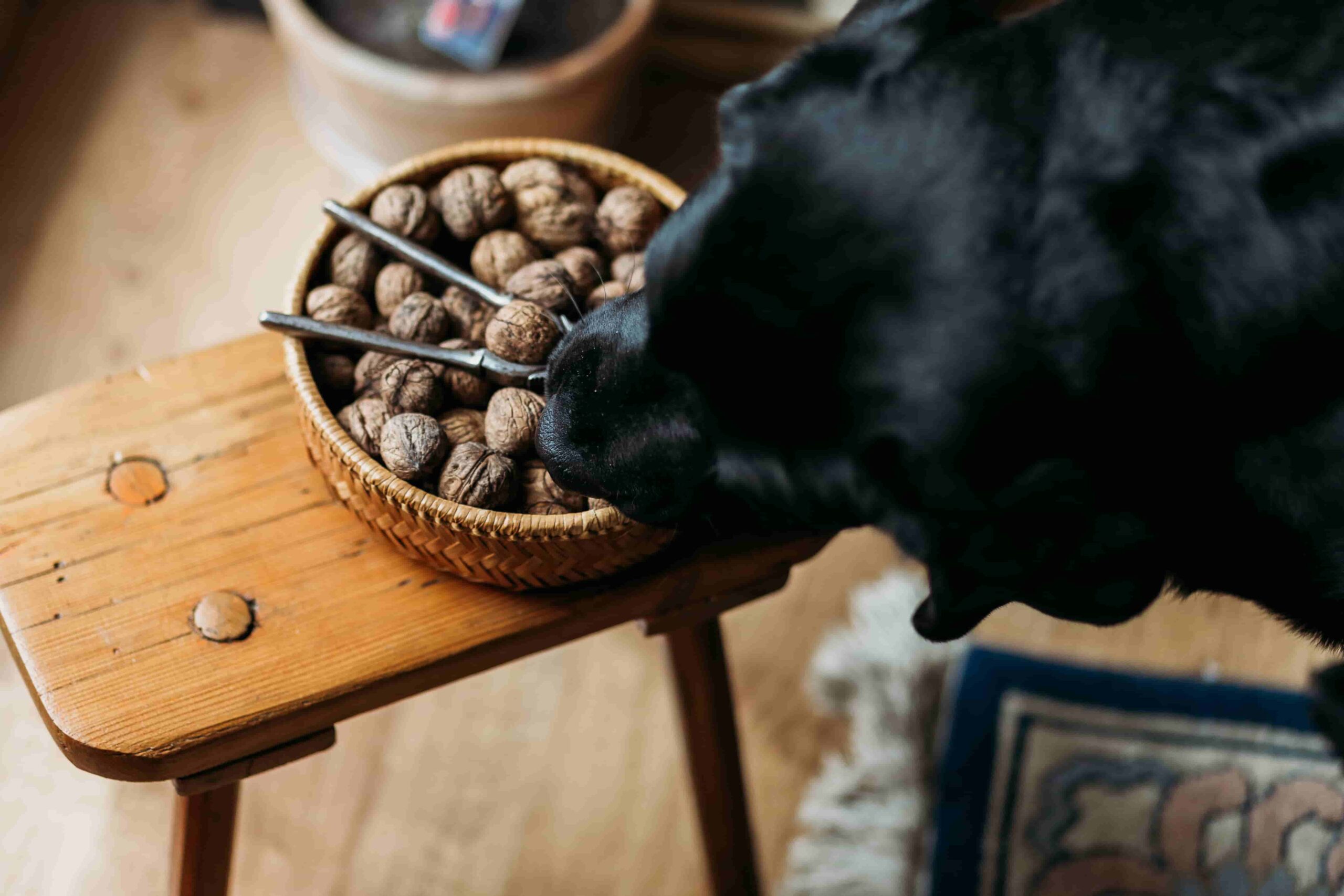
Nuts can be a tasty and nutritious snack for dogs, but not all of them are safe for your dog’s health. In this article we look at which nuts are suitable for dogs, what nutrients they provide and what risks come with certain types of nuts.
Can dogs eat nuts? And if so, which ones? Peanuts, almonds, pistachios
Can dogs eat nuts? The answer is yes: they can make a great, healthy snack, provided you choose the right type of nut, the right amount and the right way of serving them.
Dogs, like people, enjoy a variety of snacks, but not all nuts are safe for them. Below are some popular types of nuts that are safe for dogs, as long as they are given in moderation and properly prepared.
Peanuts
Peanuts are among the most popular nuts you can give to dogs. They are rich in protein, healthy fats and vitamins B and E. Just remember to serve them without salt or other additives that could harm your dog. Peanuts can also be an allergen, so introduce them gradually and watch how your dog reacts.
Almonds
Almonds are another type of nut that dogs can safely eat, but only in small quantities. They are rich in vitamins E and B2, magnesium, manganese and fibre. Because they are hard, almonds should be finely chopped to avoid the risk of choking. It is also worth noting that some dogs find almonds hard to digest, so keep an eye on your dog’s digestion after it has eaten them.
Pistachios
Pistachios are a healthy snack for dogs, as they contain fibre, protein and healthy fats. As with other nuts, avoid salted pistachios or those with added flavourings. Pistachios should also be served without the shell, which can be a choking hazard or cause digestive problems.
Walnuts as a healthy snack for dogs
Walnuts are another type of nut that can make a healthy snack for your dog. They are rich in B vitamins, folic acid, manganese, copper, zinc and dietary fibre. However, it is important to give your dog only fresh walnuts.
Spoiled nuts can harbour moulds and fungi that produce toxins harmful to dogs. That is why you should check walnuts for freshness before offering them. If the nuts are spoiled or smell suspicious, it is better not to give them to your dog. Bear in mind, too, that walnuts are high in calories, so keep portions modest.
Can dogs eat hazelnuts?
Yes, dogs can eat hazelnuts. Fresh, shelled hazelnuts can also be given to your pet from time to time. Like walnuts, hazelnuts contain plenty of valuable nutrients: vitamins B1, B6 and E, folic acid, manganese, zinc and magnesium. But when feeding hazelnuts to your dog, moderation is key.
Hazelnuts are high in calories, and too many can lead to obesity in dogs. So give them in moderate amounts as a treat or a training reward. The nuts must also be fresh and shelled. The hard shells of hazelnuts can damage a dog’s gums or even injure the digestive tract if swallowed. Make sure the nuts are properly prepared before giving them to your dog.
Can dogs eat Brazil nuts or cashews?
Besides almonds, pistachios, peanuts, walnuts and hazelnuts, there are other types of nuts that are safe for dogs. These include Brazil nuts and cashews. Both are rich in nutrients and can serve as a tasty treat or add variety to your four-legged friend’s training rewards.
| Type of nut | Nutritional value |
| Brazil nut | A rich source of B vitamins, vitamin E, magnesium, phosphorus and selenium. |
| Cashew | High in plant protein, vitamin E, thiamine, magnesium and zinc. |
As with other safe nuts, it is important to give Brazil nuts and cashews to your dog in moderation. They are high in calories, so serve them in modest amounts suited to your dog’s nutritional needs. You can offer them as a treat or to vary training rewards, giving your dog a range of flavours and textures in its diet.
Peanut butter for dogs: healthy treat or potential hazard?
Nut butter made from nuts that are safe for dogs can be a healthy and tasty treat for your four-legged friend. However, it is important to read the product label carefully and make sure it contains no additives that are harmful to dogs.
The best choice is a natural nut butter labelled “bio” or “organic”, made without any artificial additives. Also check the sugar content, as too much sugar can harm your dog’s health. You can also make nut butter for your dog at home by blending fresh peanuts, almonds or cashews.
Why macadamia nuts are harmful to dogs
Macadamia nuts are among the most harmful nuts for dogs. They contain a substance whose exact mechanism has not yet been fully identified, but it appears to be very potent. Studies show that even a small amount of macadamia nuts, as little as 0.7 g per kilogram of body weight, is enough to cause poisoning.
The first signs of macadamia poisoning in dogs can appear within 12 hours of ingestion. They may include pale mucous membranes, weakness in the hind legs, vomiting, tremors, abdominal pain and hypothermia. These problems can persist for up to 48 hours and require veterinary attention. Similar signs can occur in dogs after eating black walnuts, a species related to the common walnut.
Avoid pecans too
Pecans are very high in fat, which can lead to pancreatitis in dogs, so dogs should not eat them. They may also contain toxic substances such as juglone, which is harmful to dogs. Eating pecans can cause vomiting, diarrhoea, abdominal pain and even seizures.
General recommendations
When introducing nuts into your dog’s diet, moderation and caution are essential. Nuts should be only a small addition to the diet, never a staple. Too many nuts can lead to digestive problems such as diarrhoea, vomiting or constipation.
Dogs can also be allergic to certain nuts, which shows up as itching, a rash, swelling or even difficulty breathing. If you notice any of these signs, contact your vet immediately.
Remember, too, that some nuts, such as macadamia nuts and pecans, are highly toxic to dogs and can cause serious health problems, including weakness, vomiting, muscle tremors and a raised body temperature. That is why it is important to check carefully which nuts are safe before offering them.
Adding nuts to your dog’s diet can be a healthy and tasty way to add variety, as long as you follow the rules above and keep an eye on how your pet reacts.