

-

Parasitic diseases in rabbits: the commonest threats and how to prevent them
Coccidiosis, encephalitozoonosis, ear mange and cheyletiellosis are the parasitic diseases pet rabbits meet most often, and they can go unnoticed for a long time. We explain how they are diagnosed in the laboratory, how they are treated, and which hygiene, quarantine and feeding rules keep infection at bay.
-

How to protect your dog’s paws in winter
Frost, ice and road salt leave a dog's pads irritated, cracked and sometimes frostbitten every winter. We explain how to pick a route and a protective wax before the walk, how to rinse and dry the paws properly once you are home, and which signs mean it is time to call the veterinary clinic.
-

Horner’s syndrome in dogs and cats: signs, causes, diagnosis and treatment
A drooping eyelid, a smaller pupil and a visible third eyelid on one side add up to Horner's syndrome. It is not painful in itself and does not harm sight, but it often signals another, more serious condition underneath. We explain the causes, the diagnostic steps, the pharmacological tests and the treatment options.
Can cats eat strawberries? Is it safe?
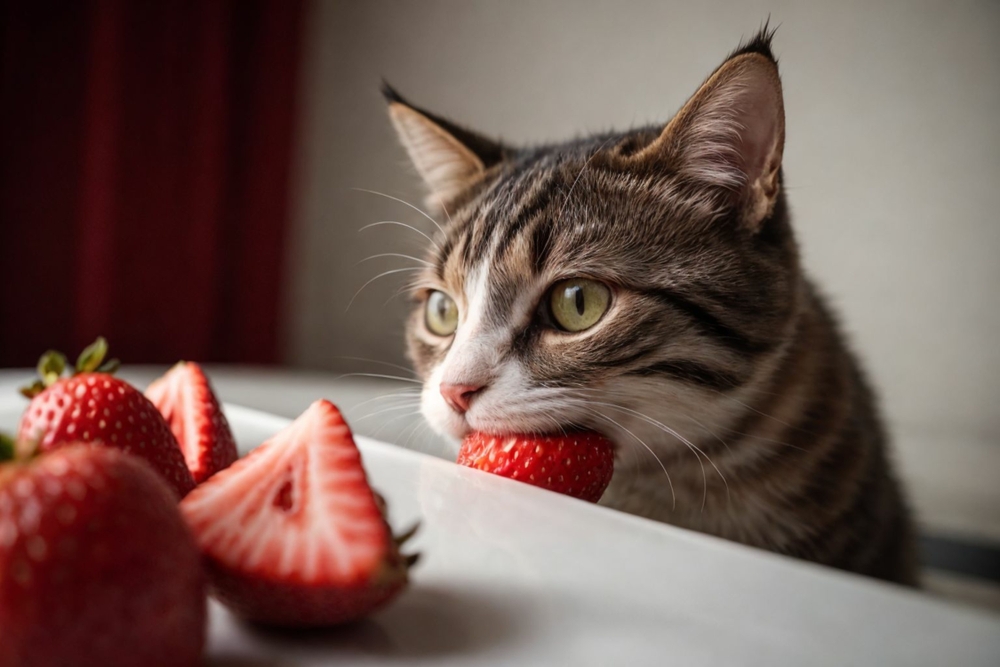
Have you ever wondered whether your furry friends can safely enjoy strawberries? It is a question that occupies many cat owners who want to give their pets a diet that is not only healthy but also varied. After all, who doesn’t like to share a favourite treat with a beloved pet now and then? In this article we take a closer look at whether strawberries are suitable for cats and how to introduce them into their diet safely. Enjoy the read!
Can cats eat strawberries?
Can cats eat strawberries? Many owners of these charming creatures ask themselves this question. Strawberries contain nothing toxic to cats, but they should still be given in moderation. Cats are carnivores, and their diet should be based mainly on animal protein. That said, every now and then you can allow your cat a little pleasure in the form of a strawberry. Just keep a few rules in mind:
That way we can be sure our cat is not only enjoying a treat but is also safe.
When giving strawberries to a cat, bear in mind their high sugar content. Natural sugar in small amounts will do no harm, but too much can lead to health problems such as obesity or diabetes. That is why strawberries should be a rare treat rather than a regular part of your pet’s diet. Watch your cat’s reaction after any new treat: if you notice anything untoward, such as vomiting or diarrhoea, it is best to stop giving them the fruit. Remember, too, that every cat is different, and what one enjoys and thrives on may upset another.
Why are cats interested in fruit?
Although cats are carnivores by nature, they sometimes show an interest in fruit. This may seem surprising given that their diet is based mainly on animal protein. But the smell and shape of fruit can catch our furry friends’ attention. Strawberries, with their intense aroma, may remind cats of catnip, which makes them intriguing. On top of that, the fruit’s shape is perfect for play, which can be another reason for their curiosity.
Bear in mind that cats do not taste sweetness the way humans do. Their tongues have far fewer taste buds – fewer than 500, compared with over 9,000 in humans. So fruit holds no appeal for them in terms of taste. A cat’s interest in fruit has more to do with its sense of smell and its instinct to play. Here are a few reasons cats may be drawn to fruit:
Understanding this behaviour can help owners adapt the home environment to their pets’ needs while keeping them safe as they explore new tastes and smells.
Health benefits and risks of strawberries for cats
Although strawberries are not a natural part of a cat’s diet, they can offer some health benefits. They contain vitamins such as C and K, as well as antioxidants that may support your cat’s health. Antioxidants help fight free radicals, which can contribute to the body’s overall resilience. However, cats, as carnivores, do not need these nutrients in large amounts. That is why strawberries should only ever be an occasional treat, not a regular part of the diet.
When giving strawberries to a cat, be aware of the potential risks. The fruit contains sugar, which in excess can lead to health problems such as obesity or diabetes. Some cats may also be allergic to strawberries, which can show up as vomiting or diarrhoea. To avoid problems, always keep an eye on your pet after any new treat and watch for possible allergic reactions. Remember to wash the fruit thoroughly and remove the stalks before giving it to your cat.
How to give strawberries to cats safely
Giving strawberries to cats calls for some care to keep them safe and healthy. First of all, before you decide to offer this fruit to your pet, make sure the strawberries are washed thoroughly. Removing any pesticide residue is essential for your cat’s health. The next important step is to remove the stalks, which can be hard to digest and may irritate the animal’s digestive tract. Remember that strawberries should be given in small amounts as an occasional treat, not as a regular part of the diet.
After giving strawberries, it is worth watching your cat to make sure there are no adverse reactions. Look out for symptoms such as vomiting, diarrhoea or loss of appetite. If you notice anything worrying, consult your vet. Here are a few tips for giving strawberries safely:
With these simple steps you can enjoy happy moments with your pet while looking after their health and safety.
Alternative fruits and treats for cats
If you are wondering which fruits might be safe for your cat, there are a few options worth considering. Blueberries and melon are examples of fruit that can be given to cats in moderation. Blueberries are rich in antioxidants, which may support your pet’s health. Melon, meanwhile, provides extra moisture, which is helpful for cats, who often drink little water. Just remember to always remove the seeds and skin before offering these fruits to your cat.
Avoid fruit such as grapes and citrus, which can be toxic to cats. Grapes can cause serious health problems, including kidney failure. Citrus fruit, in turn, can upset your pet’s stomach. If you are looking for alternative snacks for your cat, consider dried pieces of meat such as chicken or turkey. These natural treats are high in protein and contain no additives or preservatives. Here are a few safe snack ideas:
Remember to always keep an eye on your cat after introducing a new treat into their diet, and consult your vet if you notice any worrying symptoms.
Can cats eat strawberries? Summary
Cats can eat strawberries, but in moderation. Although the fruit is not toxic to cats, their diet should be based mainly on animal protein. Strawberries can be given as an occasional treat, provided they are thoroughly washed and the stalks removed. It is important to watch your cat’s reaction after eating strawberries and to avoid them if any adverse symptoms appear.
Strawberries contain sugar, which in excess can lead to health problems in cats such as obesity or diabetes. That is why they should be treated as a rare treat. Cats may be interested in fruit because of its smell and shape, but they do not taste sweetness the way humans do. It is also worth considering other cat-safe fruits and treats, such as blueberries or melon, remembering to remove the seeds and skin before serving.